The Underground Railroad went all the way to Canada – and a new photo exhibit preserves that legacy
Share
Explore Our Galleries









Breaking News!
Today's news and culture by Black and other reporters in the Black and mainstream media.
Ways to Support ABHM?
By Adria R Walker, The Guardian
For an estimated 30,000 Black people, the journey from enslavement in the US ended north of the border
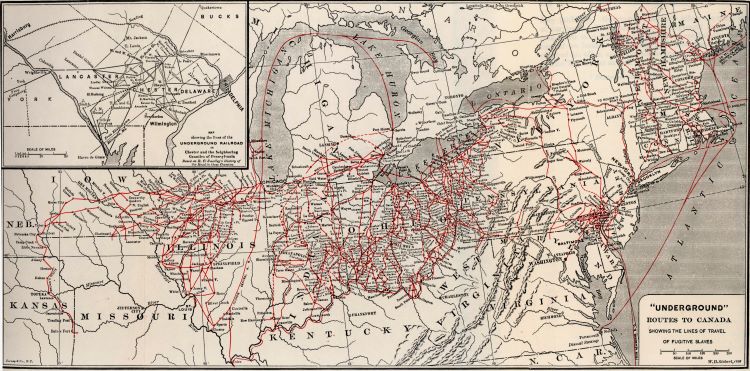
Between the late 18th century and the end of the American civil war, tens of thousands of Black Americans escaped the bondage of slavery by fleeing plantations to go north. The Underground Railroad – a network of abolitionists who secured the safe passage of enslaved people to freedom – had stops in states in which slavery was illegal, such as Michigan, Pennsylvania, Ohio and New York. But for an estimated 30,000 people, the journey continued beyond those states into Canada.
Early Black American settlers in Canada – people who became Black Canadians before Canada was a country – made an indelible mark on their new home. They created thriving communities across Ontario and Nova Scotia and as far west as the Manitoba border; they founded abolitionist newspapers and paved the way for waves of migration that would follow.
But in the years since their arrival, with subsequent waves of migration led by others of African descent, the story of Black Canadians whose ancestors participated in the Underground Railroad has largely been untaught. An exhibit, on view at the Art Windsor-Essex in Windsor, Ontario, until 8 June, seeks to preserve their stories.
“We’ve been in Canada longer than Canada has been a country, because it was 1867 when Canada became a country,” said curator Dorothy Abbott, whose family settled in Owen Sound, Ontario, the northern terminus of the Underground Railroad, in the early 1850s. “My grandmother was born there in 1876, and my mother was born there in 1917.”
North Is Freedom: Descendants of Freedom-Seekers on the Underground Railroad is a photo essay of 30 images that celebrate and preserve the living legacies of freedom-seekers who escaped slavery. Those legacies are often highlighted in the exhibit through their descendants: Irene Moore Davis, a historian descended from Susan and Charles Christian and George Braxton Dunn who fled Kentucky and Ohio, respectively, before the Underground Railroad led them to Canada; Dr Bryan Walls, whose ancestors John Freeman Walls and Jane King Walls fled North Carolina; and Spencer Alexander, whose ancestors Thomas and Catherin Alexander also fled Kentucky for Canada, all figure prominently in the show. Many of the descendants have taken up the banner themselves, becoming historians working to preserve the lives of their ancestors.
Meanwhile, federal websites have erased the impact of the Underground Railroad. Rest assured ABHM will always teach Black history.
More breaking Black news.
Comments Are Welcome
Note: We moderate submissions in order to create a space for meaningful dialogue, a space where museum visitors – adults and youth –– can exchange informed, thoughtful, and relevant comments that add value to our exhibits.
Racial slurs, personal attacks, obscenity, profanity, and SHOUTING do not meet the above standard. Such comments are posted in the exhibit Hateful Speech. Commercial promotions, impersonations, and incoherent comments likewise fail to meet our goals, so will not be posted. Submissions longer than 120 words will be shortened.
See our full Comments Policy here.
[…] to bring formerly enslaved people and free Blacks further north to the safety of Canada. Around 30,000 people entered Canada on the underground […]