The Biles Effect: A New Narrative on Mental Health in Sports
Share
Explore Our Galleries









Breaking News!
Today's news and culture by Black and other reporters in the Black and mainstream media.
Ways to Support ABHM?
By Anissa Durham, Word in Black
Simone Biles dominated the 2024 Paris Olympics. We asked Black women what Biles outspokenness about mental health means to them.
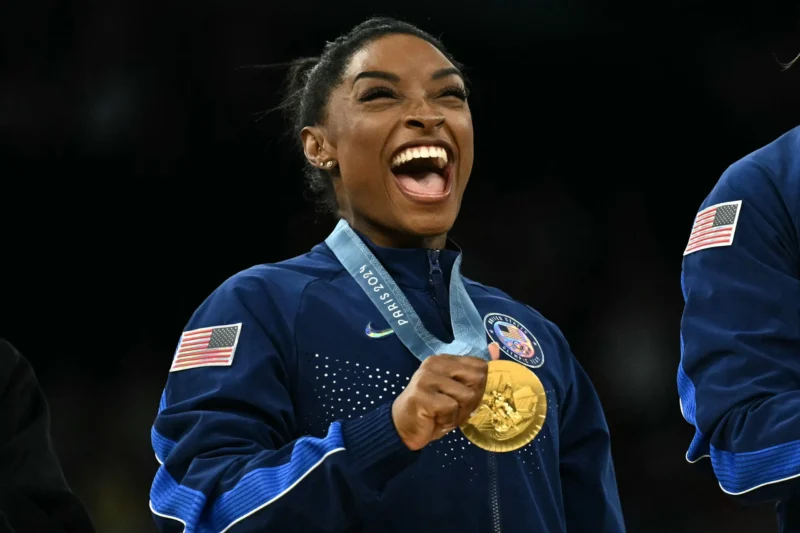
Simone Biles came back with a vengeance.
The 27-year-old has officially become the most decorated U.S. gymnast in world championships history after earning three gold medals at the 2024 Olympics in Paris. But her incredible return to the sport is not just about her physical prowess. Biles’ comeback puts the resilience of Black athletes in overcoming significant mental health challenges back in the spotlight.
Biles is commonly called the GOAT because she is the greatest of all time. But the toll it takes to perform at an Olympic level is heavy and can quickly become dangerous. The question then becomes: would she still be the GOAT if she hadn’t prioritized her mental health? With the alarming rates of anxiety, depression, suicide, and opioid overdoses rising in the Black community, the need to prioritize mental health is even more pressing.
In the 2020 Tokyo Olympic games, which was held in summer 2021 due to the COVID-19 pandemic, Biles made headlines after withdrawing from the competition for a mental block, commonly called the twisties. Immediately after her Tokyo withdrawal, a firestorm of social media comments called her a quitter, lazy, and claimed she abandoned her team. Despite immense pressure to compete, Biles prioritized her mental health and safety.
Find more Breaking News here.
Explore our virtual exhibit galleries here.
Comments Are Welcome
Note: We moderate submissions in order to create a space for meaningful dialogue, a space where museum visitors – adults and youth –– can exchange informed, thoughtful, and relevant comments that add value to our exhibits.
Racial slurs, personal attacks, obscenity, profanity, and SHOUTING do not meet the above standard. Such comments are posted in the exhibit Hateful Speech. Commercial promotions, impersonations, and incoherent comments likewise fail to meet our goals, so will not be posted. Submissions longer than 120 words will be shortened.
See our full Comments Policy here.