Woman with sickle cell disease celebrates 80th birthday, defying life expectancy odds by decades
Share
Explore Our Galleries









Breaking News!
Today's news and culture by Black and other reporters in the Black and mainstream media.
Ways to Support ABHM?
By Fredlyn Pierre Louis, NBC News
Patricia McGill is among the oldest people in the U.S. with sickle cell disease, and she attributes her longevity to optimism, faith, a supportive community and good nutrition.
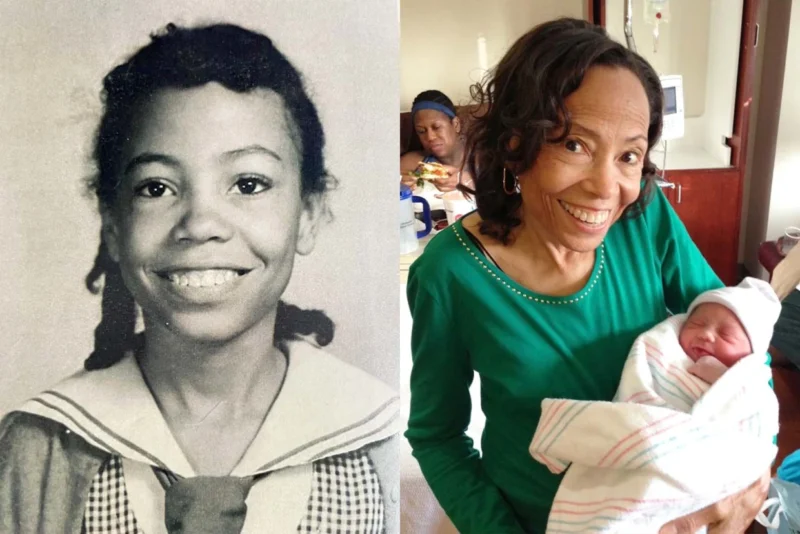
When Patricia McGill was 13 and learning that she had inherited sickle cell disease, she did not think she would reach 30.
But now she and her family are celebrating McGill’s 80th year.
McGill is one of the nation’s oldest people with sickle cell disease, living decades past age 52, the life expectancy of someone with the disease, which has a disproportionate effect on Black people.
Born and raised in Houston, McGill was diagnosed with sickle cell disease after years of mysterious illnesses. “I was sick a lot, and when I did get sick, it was more serious than if my siblings got the same illness,” McGill said.
Despite her condition, McGill was determined to live life fully. In the 1970s, according to Public Health Reports, life expectancy for people with sickle cell disease was less than 20 years.
“I decided that if I might only live to about 30, which is what I initially thought, I would do everything I wanted to do,” she said.
In 1963, McGill enrolled in Hampton University in Virginia, 1,300 miles away from home, to study elementary and special education. School was challenging for McGill due to her illness and being so far from home. Even minor colds could escalate into full health crises.
Still, McGill accomplished two of her goals — she became a teacher and a mother, eventually having three children. For 37 years, she worked with students with learning disabilities, driven by her deep understanding of their struggles.
Some believe sickle cell has originated in Africa, where the ancestors of many Black Americans lived.
Find more Breaking News here.
Comments Are Welcome
Note: We moderate submissions in order to create a space for meaningful dialogue, a space where museum visitors – adults and youth –– can exchange informed, thoughtful, and relevant comments that add value to our exhibits.
Racial slurs, personal attacks, obscenity, profanity, and SHOUTING do not meet the above standard. Such comments are posted in the exhibit Hateful Speech. Commercial promotions, impersonations, and incoherent comments likewise fail to meet our goals, so will not be posted. Submissions longer than 120 words will be shortened.
See our full Comments Policy here.