‘I Have a Dream’ is MLK’s most radical speech — not because of what he said then, but because of how America has changed since
Share
Explore Our Galleries









Breaking News!
Today's news and culture by Black and other reporters in the Black and mainstream media.
Ways to Support ABHM?
By John Blake, CNN
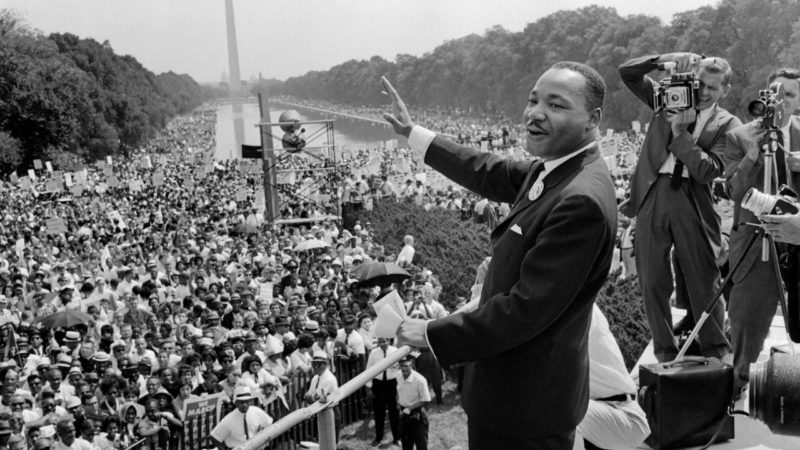
As the nation celebrates the Rev. Dr. Martin Luther King Jr.’s national holiday, millions of Americans will once again hear what has become the day’s unofficial soundtrack: King’s “I Have a Dream” speech.
The speech King gave 60 years ago in Washington has been endlessly replayed, dissected and misquoted. It’s his most famous speech. But here’s another way to look at it:
It is also the most radical speech King ever delivered.
[…]
Forget the nonthreatening version of the speech you’ve been taught that emphasizes King’s benign vision of Black, White and brown Americans living in blissful racial harmony.
[…]
The concept of integration that King evoked in his “I Have a Dream” speech is the most “radical, discomfiting and transformative” idea in US politics, adds Baker, a novelist and professor at Skidmore College in Saratoga Springs, New York.
Blake has more to say about Dr. King’s radical speech.
King was a significant player in the Civil Rights movement but far from the only one.
More stories about people who fought for racial equality.
Comments Are Welcome
Note: We moderate submissions in order to create a space for meaningful dialogue, a space where museum visitors – adults and youth –– can exchange informed, thoughtful, and relevant comments that add value to our exhibits.
Racial slurs, personal attacks, obscenity, profanity, and SHOUTING do not meet the above standard. Such comments are posted in the exhibit Hateful Speech. Commercial promotions, impersonations, and incoherent comments likewise fail to meet our goals, so will not be posted. Submissions longer than 120 words will be shortened.
See our full Comments Policy here.