For many Black Kentuckians and Tennesseans, August 8 is a day to mark freedom
Share
Explore Our Galleries









Breaking News!
Today's news and culture by Black and other reporters in the Black and mainstream media.
Ways to Support ABHM?
By NPR
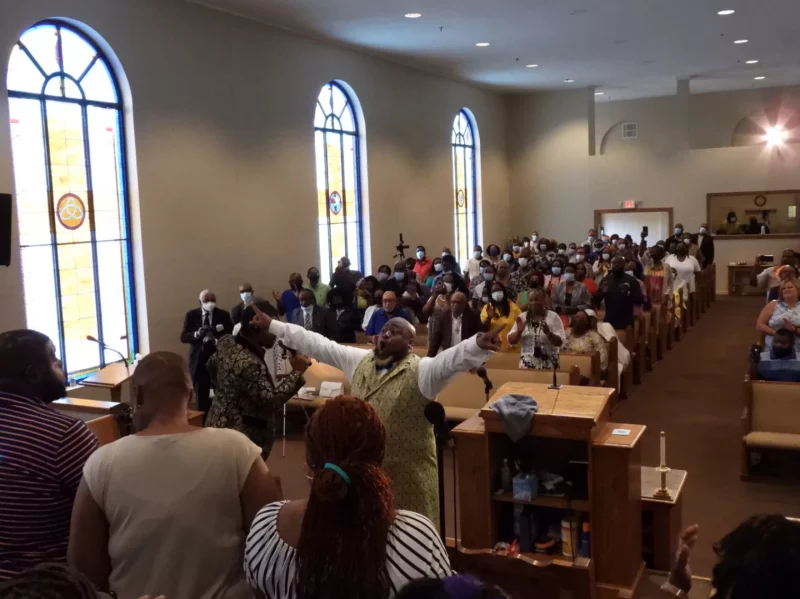
Black communities in Kentucky and Tennessee have celebrated the eighth of August for more than 150 years. It’s a day for barbecue, loved ones and marking freedom from slavery.
JUANA SUMMERS, HOST:
For many Black people in Kentucky and Tennessee, the 8 of August is a special day in the same spirit as Juneteenth. And as Derek Operle of member station WKMS reports, the regional emancipation celebration was started by the freed slave of a U.S. president.
DEREK OPERLE, BYLINE: Black communities in Kentucky and Tennessee have been turning out on the 8 of August for over 150 years, marking their freedom from slavery with homecomings, historical remembrances and usually a good party.
[…]
OPERLE: Historians say August 8, 1863, was the day future U.S. President Andrew Johnson freed his own slaves in Tennessee. Johnson, then military governor of the state, did this because the Emancipation Proclamation earlier that year didn’t include Tennessee, which was then under Union control. And Kentucky wasn’t included because it was a neutral border state in the Civil War. One of those slaves, Samuel Johnson, organized the first 8 of August event in Greenville eight years later. Here’s William Isom, the director of Black In Appalachia, a nonprofit that documents African American contributions to the Mountain South.
Read or listen to the full article here.
For these residents, this date is as important as Juneteenth, now a federal holiday, was to Texas.
Read more relevant articles.