The Challenge of Black Patriotism
Share
Explore Our Galleries









Breaking News!
Today's news and culture by Black and other reporters in the Black and mainstream media.
Ways to Support ABHM?
For Black Americans, loving the country and criticizing it have always been inseparable — something other Americans have often struggled to understand.
By Theodore R. Johnson, The New York Times
“The month after the surprise December 1941 military strike that left the Pearl Harbor naval station smoldering and Americans filled with anger and patriotic fervor, a letter to the editor arrived at The Pittsburgh Courier, one of the nation’s most-circulated Black weekly newspapers. Its author was James G. Thompson, a 26-year-old cafeteria worker at a factory in Wichita, Kan., that manufactured aircraft for the military….”
“’…I love America more than any other country in the world,’ James Baldwin wrote in “Notes of a Native Son,” “and, exactly for this reason, I insist on the right to criticize her perpetually.” Or, as Thompson concluded in his letter to The Courier, “I love America and am willing to die for the America I know will someday become a reality.” This is the crux of Black patriotism, an expression of national praise and chastening drawn from the same well. It cannot know only uncritical adoration because history and lived experience remind us the nation has often been too cruel, and it cannot be only sharp tongues and elbows because our work and faith have had a hand in America’s existence and evolution….”
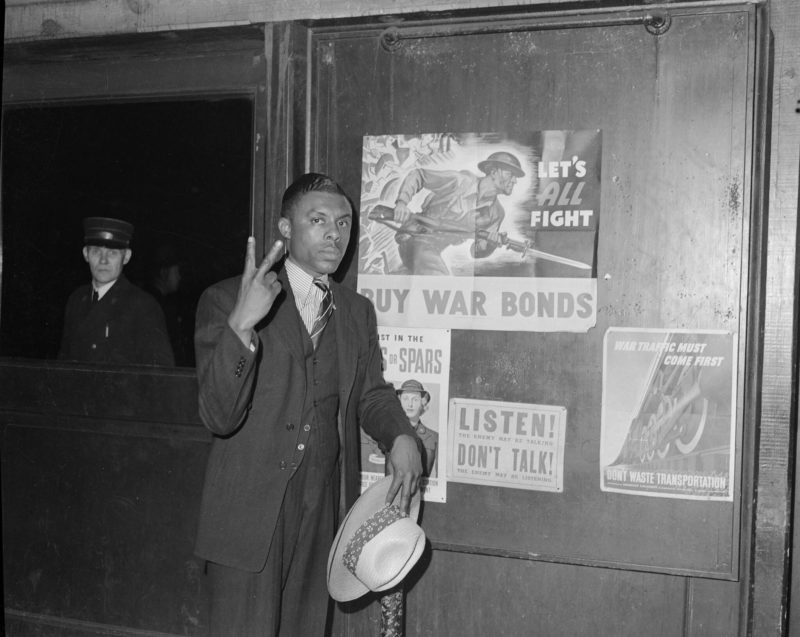
“…The early 20th century had an explosion of Black civic engagement. Civil rights organizations like the N.A.A.C.P. sprang to life; Black churches became even more central to political and social power; cultural movements like the Harlem Renaissance injected intellectual and artistic challenges to racism in America. Black military service members distinguished themselves in war, and brave Black citizens across the South and destinations of the Great Migration organized to challenge racism in their communities. In a 2017 journal article, the University of South Florida sociologist Micah E. Johnson suggests this conscious patriotism remains a common orientation in Black America, being “equally connected to both America as a homeland and the realities of Black oppression in America….”
“…Over all, the study [‘American Fabric: Finding Our Shared Identity’] finds that conservatives tend to define America by its perceived strengths and that progressives tend to emphasize its perceived weaknesses.
Black Americans, of course, do both. Black patriotism does not hold that America is irredeemably racist — it asks if America is interested in redemption. It is forward-looking and informed by history, meshing optimism about the nation’s prospects with a realism about its struggles with racial equality. And it is rooted in the task of helping the nation reconcile “Black” with “American.” As Joe Biden put it last month in a speech at Gettysburg that nodded at the promise of America without shying away from its troubles: ‘I think about what it takes for a Black person to love America. That is a deep love for this country.’”
Read the full article here
Learn more about African-American patriotism here
More Breaking News here
Comments Are Welcome
Note: We moderate submissions in order to create a space for meaningful dialogue, a space where museum visitors – adults and youth –– can exchange informed, thoughtful, and relevant comments that add value to our exhibits.
Racial slurs, personal attacks, obscenity, profanity, and SHOUTING do not meet the above standard. Such comments are posted in the exhibit Hateful Speech. Commercial promotions, impersonations, and incoherent comments likewise fail to meet our goals, so will not be posted. Submissions longer than 120 words will be shortened.
See our full Comments Policy here.