Hey, Jeff Sessions: Remember When 6,000 White Americans Went on Strike to Keep 8 Black People From Getting Promoted?
Share
Explore Our Galleries









Breaking News!
Today's news and culture by Black and other reporters in the Black and mainstream media.
Ways to Support ABHM?
By Jason Johnson, The Root
Over the past month, the Trump administration has been rolling out “theme weeks” as if America were one big dysfunctional high school and the homecoming game will fix everything.
In July there was Made in America Week to highlight business; American Heroes Week highlighted the military; and to kick off August, the administration launched “White Pride” Week to highlight the plight of the oppressed white American male.
[…]
This overtly hostile aggression from the federal government against black education, employment and lives is the perfect run-up to today’s critical racial anniversary.
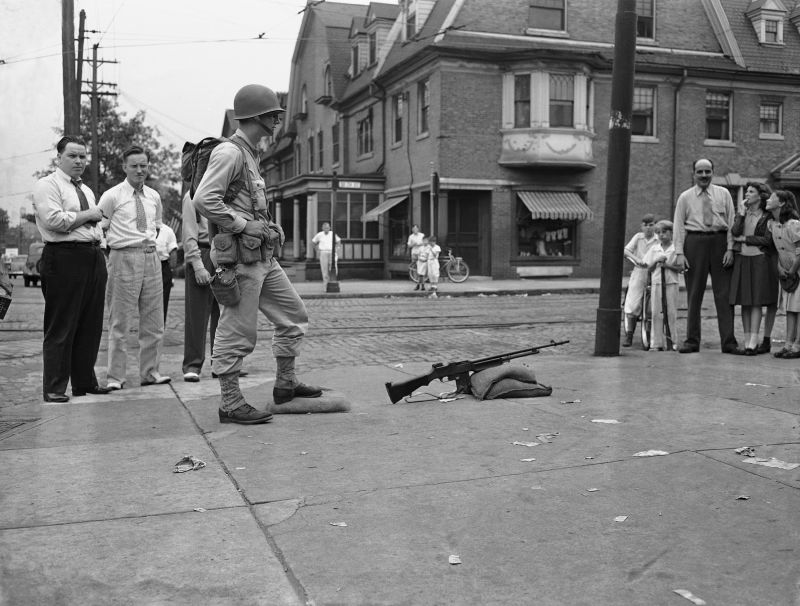
On Monday, Aug. 7, 1944, the Philadelphia transit strike—one of the most costly, violent and important battles for African-American rights in the last century—ended. The story of black struggle against brutal, self-destructive white hatred is a perfect reminder of just how far back in history the Trump administration wants to take us.
During World War II, Philadelphia was one of the most important supply cities for the Allied efforts.
[…]
All of this was made possible by the Philadelphia Transit Co.’s 11,000 employees, who managed trains, trollies and buses for almost 600,000 commuters in the City of Brotherly Love everyday….
In May 1943, however, President Franklin D. Roosevelt signed executive order No. 9346, which empowered the Fair Employment and Practices Commission to force companies with federal contracts to train, hire and promote African-Americans equally.
As the law began to trickle down to various cities across the country, the PTC was told by the federal government that it would have to start hiring and promoting black workers…
The company’s solution was to promote eight black men to bus and trolley drivers.
[…]
In January 1944, over 1,700 white employees signed a petition stating, “We, the white employees of the Philadelphia Transit Corporation, refuse to work with Negroes as motormen, operators, and station trainmen.”
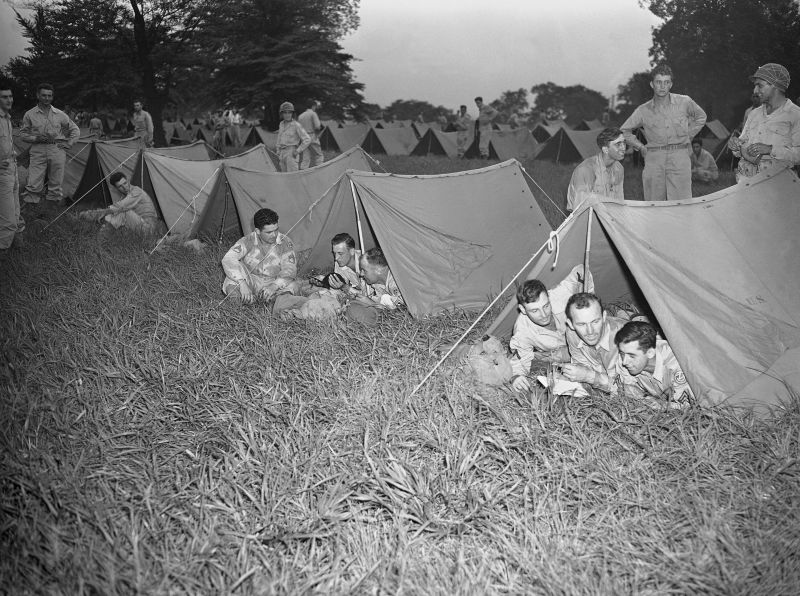
When, after months of negotiations and insistence by the NAACP, the black workers were slated to begin training as drivers that August, white workers went on strike Tuesday, Aug. 1, 1944.
Despite being in violation of their union contract, as well as of federal law, the four white ringleaders of the strike said that nobody was getting back to work until the eight black rail workers were demoted.
James McMenamin, the leader of the strike,…was fired and charged with violating federal labor laws but got off a year later when a jury found the evidence against him “inconclusive.”
There is a context to the pettiness of this strike that can’t be overlooked in our current political environment. The United States was in the midst of a war against Nazis, and transit employees were crucial to keeping troops equipped for that war, but keeping black men from getting promoted was more important than fighting the Nazi threat.
Millions of pounds of munitions were lost that week, and the man hours lost amounted to the loss of five naval destroyers.
[…]
It is also estimated that thousands of American lives may have been lost in the European theater of World War II because of the strike. But that didn’t matter, because stopping a few black guys was more important to a large swath of working-class white America.
It’s important to remember that while all of this occurred 73 years ago, with a stroke of a pen, a tweet and a few white nationalists at 1600 Pennsylvania Avenue, the Trump administration wants to return America to those days of white grievance, violence and discrimination, no matter what legitimate challenges our nation faces.
Read full article here.
Read more Breaking News here.
Find out more here about this 100-year period of discrimination, segregation, and anti-black violence (known as the “Jim Crow Era” and “The Nadir of Race Relations”).
Comments Are Welcome
Note: We moderate submissions in order to create a space for meaningful dialogue, a space where museum visitors – adults and youth –– can exchange informed, thoughtful, and relevant comments that add value to our exhibits.
Racial slurs, personal attacks, obscenity, profanity, and SHOUTING do not meet the above standard. Such comments are posted in the exhibit Hateful Speech. Commercial promotions, impersonations, and incoherent comments likewise fail to meet our goals, so will not be posted. Submissions longer than 120 words will be shortened.
See our full Comments Policy here.