Pillars of Black Media, Once Vibrant, Now Fighting for Survival
Share
Explore Our Galleries









Breaking News!
Today's news and culture by Black and other reporters in the Black and mainstream media.
Ways to Support ABHM?
By SYDNEY EMBER and NICHOLAS FANDOS, New York Times
For the black community in Chicago and elsewhere, Johnson Publishing Company represented a certain kind of hope.
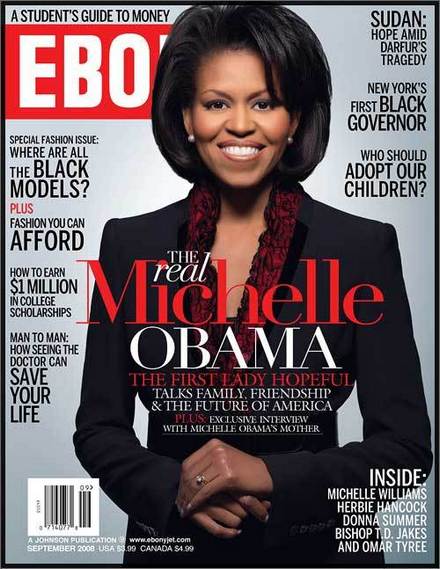 The company’s magazines, most notably Ebony and Jet, gained prominence during the struggle for civil rights — Jet published graphic photos of the murdered black teenager Emmett Till that helped intensify the movement — and made it their mission to chronicle African-American life.
At a time when much of the media was ignoring black people, or showing them primarily in the context of poverty or crime, Ebony and Jet celebrated their success, featuring stars like Muhammad Ali and Aretha Franklin on their covers. When Barack Obama was elected president in 2008, the first print publication he granted an interview to was Ebony.
So when Johnson Publishing, which is based in Chicago, announced a little more than two weeks ago that it had sold Ebony and Jet to a private equity firm in Texas, there was a sense of loss.
“It was a very heartbreaking day,” said Melody Spann-Cooper, the chairwoman of Midway Broadcasting Corporation, which owns a Chicago radio station, WVON, aimed at a black audience. “Ebony gave to African-Americans what Life didn’t.”
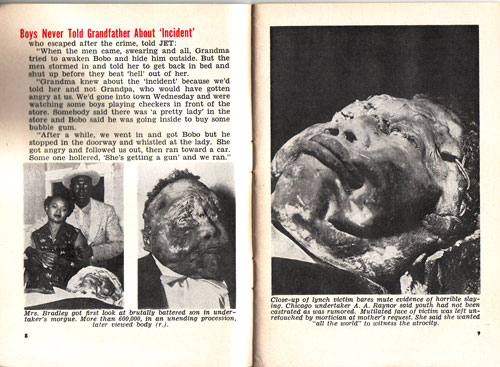
Jet Magazine printed what mainstream presses would not — including the photos of teenager Emmett Till’s lynched and mutilated body, in its October 1960 issue.
Ms. Spann-Cooper’s reaction underscored a deeper concern: As racial issues have once again become a prominent topic in the national conversation, the influence of black-owned media companies on black culture is diminishing.
“Ebony used to be the only thing black folks had and read,” Ms. Spann-Cooper said. “As we became more integrated into society, we had other options.”…
Traditional media companies have struggled for years to adapt to a digital world, but the pressure on black-owned media has been even more acute. Many are smaller and lack the financial resources to compete in an increasingly consolidated media landscape. Advertisers have turned away from black-oriented media, owners say, under the belief that they can now reach minorities in other ways.
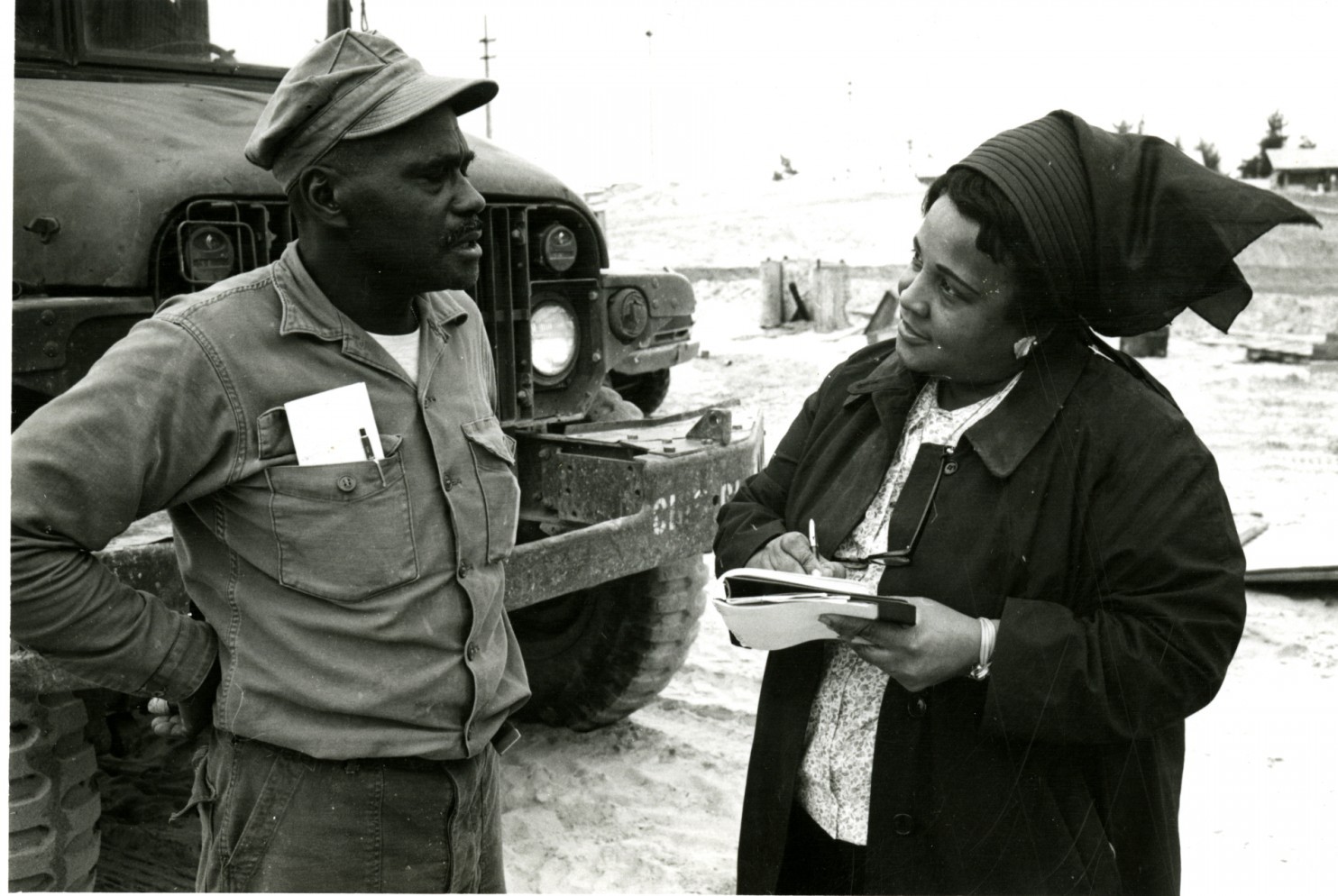
Ethel Payne, known as the First Lady of the Black Press, speaks with a soldier in Vietnam. Payne was a city reporter and later Washington correspondent for the black newspaper, the Chicago Defender, in the 1950s and ’60s. (By Moorland-Spingarn Research Center, HarperCollins)
Since well before the Civil War, publications and, more recently, radio and television stations owned and operated by African-Americans have provided an important counterweight to mass market media, simultaneously celebrating and shaping black culture — from politics and government to fashion and music.
Johnson Publishing was started in 1942 with a modest $500 loan, and eventually turned into a media empire big enough that in 1982, its founder, John H. Johnson, became the first black person to make Forbes magazine’s list of the 400 wealthiest Americans. When the radio station WVON ran a program in 2007 for Black History Month called the “28 Blacks Who Changed America,” Mr. Johnson, who died in 2005, was No. 7 on the list, behind luminaries like Martin Luther King Jr., Rosa Parks and Thurgood Marshall.

WVON Radio in Chicago is aimed at a black audience. Credit Lyndon French for The New York Times
“If we don’t own our press, we don’t have a platform to speak,” said Leonard Burnett Jr., whose company, the Uptown Ventures Group, owns Uptown Magazineuptlifestyle publication aimed at affluent African-Americans.
Several owners also pointed to another benefit: Their companies hired more minorities. Ms. Spann-Cooper of the Midway Broadcasting Corporation said 90 percent of her employees were African-American. “When we are African-American-owned, the work force looks like us,” she said.
But as financial resources dwindle, black-owned media companies are struggling to maintain their presence. Jet, for instance, became a web-only publication in 2014….
Read the full article here.
For more information, see this exhibit By Us, For Us: The Crucial Role of the Black Press.
More Breaking News here.
A Very Short List of National Black Press Outlets
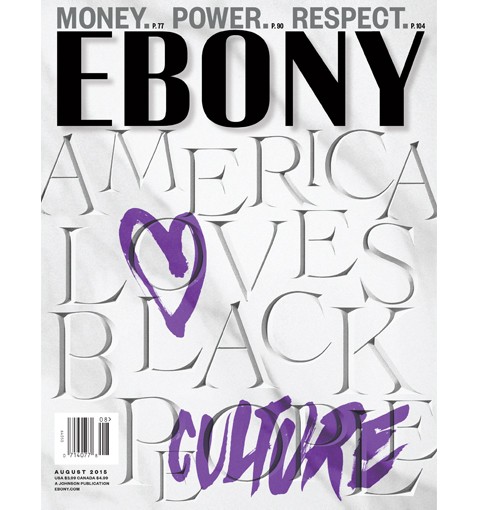
Ebony Magazine’s print cover, August 8, 2015. Ebony was founded by John H. Johnson and has published continuously since 1945. This monthly magazine reaches 11 million readers. Its digest-sized sister magazine, Jet, is also published (now online only) by Johnson Publishing Company.
Online
Ebony (also in print)
Essence (also in print)
In Print
Black News Directory (A listing of dozens of some of the 200+ black publications published in the USA – from the American Legacy Magazine to Hip Hop Weekly.)
National Newspaper Publishers Association (and links to member papers of the NNPA black press in each state)
Black Perspectives Sections within White-Owned/Operated Media
Shadow and Act (on Cinema of the African Diaspora)
Huffington Post Black Voices
NY Times Black Culture and History section
Comments Are Welcome
Note: We moderate submissions in order to create a space for meaningful dialogue, a space where museum visitors – adults and youth –– can exchange informed, thoughtful, and relevant comments that add value to our exhibits.
Racial slurs, personal attacks, obscenity, profanity, and SHOUTING do not meet the above standard. Such comments are posted in the exhibit Hateful Speech. Commercial promotions, impersonations, and incoherent comments likewise fail to meet our goals, so will not be posted. Submissions longer than 120 words will be shortened.
See our full Comments Policy here.