8 Suspected Lynchings Have Taken Place in Mississippi Since 2000
Share
Explore Our Galleries









Breaking News!
Today's news and culture by Black and other reporters in the Black and mainstream media.
Ways to Support ABHM?
Mississippi was a top state for lynching and, according to a report in the Washington Post, it still is.
Terrell Jermaine Starr, the Root
There is no more blatant form of racial intimidation against a Black person that one can use than that of a noose. The practice of lynching was used against enslaved Black people, but it was an especially popular form of violence against Black Americans after slavery ended.
It is considered a more dated form of violence today, but a story in the Washington Post reports that the practice of lynching never truly stopped.
Jill Collen Jefferson, a lawyer and founder of Julian, a civil rights organization named after the late civil rights leader Julian Bond, has been conducting her own research into lynching in Mississippi and found that at least eight Black people have been lynched in the state since 2000. She began her research into lynchings across the country in 2017 and focused on Mississippi, her home state, in 2019. In each case of lynching she discovered, Jefferson said the police ruled the deaths suicides, but the families of the deceased said their loved ones were lynched.
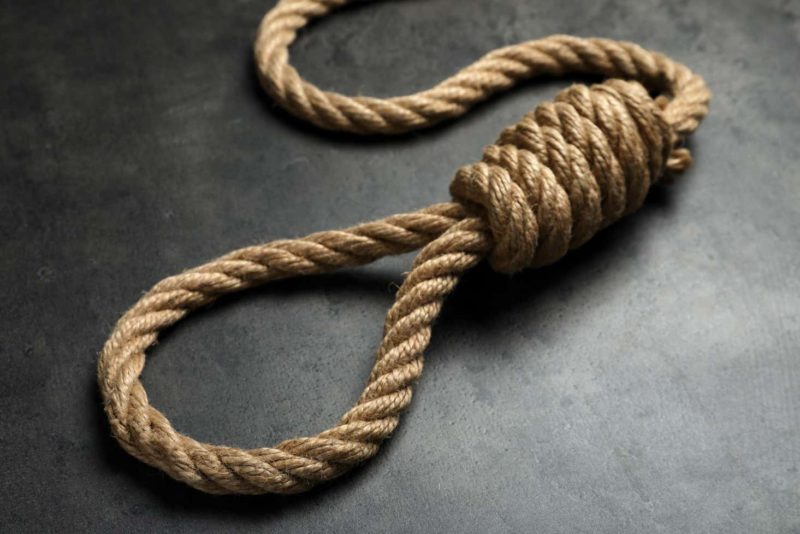
“There is a pattern to how these cases are investigated,” Jefferson said. “When authorities arrive on the scene of a hanging, it’s treated as a suicide almost immediately. The crime scene is not preserved. The investigation is shoddy. And then there is a formal ruling of suicide, despite evidence to the contrary. And the case is never heard from again unless someone brings it up.”
The most recent case of 35-year-old Deondrey Montreal Hopkins ended with local police saying that his death was not a homicide. Phillip Carroll, 22, was found hanging from a tree, in Jackson, Miss., May 28, 2018. His death was ruled a suicide. Otis Byrd, 55, was found hanging from a tree in Port Gibson, Miss., on March 19, 2015. His death was ruled a suicide. The FBI and the Justice Department’s Civil Rights Division conducted an investigation and found no foul play.
You see where this is going.
The bottom line is that lynching is still a tool of racist attack against Black folks and we are fooling ourselves if we think the practice died with the ending of Jim Crow.
“The last recorded lynching in the United States was in 1981,” Jefferson said. “But the thing is, lynchings never stopped in the United States. Lynchings in Mississippi never stopped. The evil bastards just stopped taking photographs and passing them around like baseball cards.”
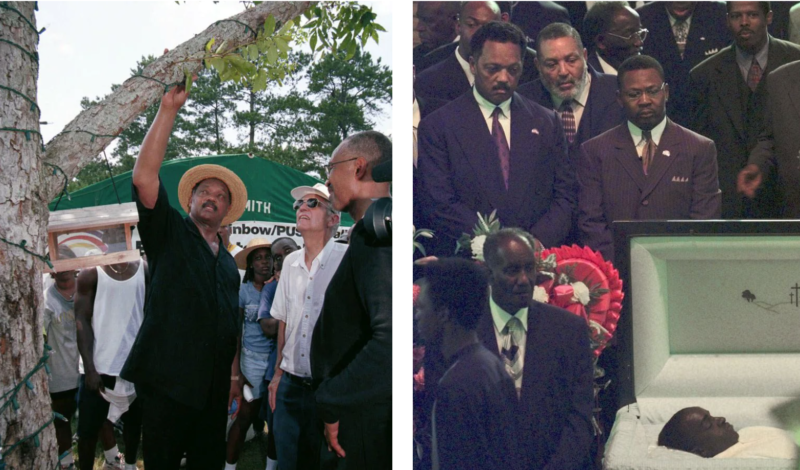
For more detailed information about modern lynchings, read ‘Lynchings in Mississippi never stopped’ and about the hunting and murder of James Craig Anderson by three Mississippi teens.
More Breaking News here.
Comments Are Welcome
Note: We moderate submissions in order to create a space for meaningful dialogue, a space where museum visitors – adults and youth –– can exchange informed, thoughtful, and relevant comments that add value to our exhibits.
Racial slurs, personal attacks, obscenity, profanity, and SHOUTING do not meet the above standard. Such comments are posted in the exhibit Hateful Speech. Commercial promotions, impersonations, and incoherent comments likewise fail to meet our goals, so will not be posted. Submissions longer than 120 words will be shortened.
See our full Comments Policy here.