1918 ‘race war’ has ties to Philadelphia’s present
Share
Explore Our Galleries









Breaking News!
Today's news and culture by Black and other reporters in the Black and mainstream media.
Ways to Support ABHM?
By Avi Wolfman-Arent, The Philadelphia Tribune
In 1918, Philadelphia’s Black population was booming. The wartime economy drew migrants from the deep South, and the city’s ghettos overflowed….
In search of better housing, some African Americans trickled into Grays Ferry, a predominantly poor, Irish-American neighborhood near the east banks of the Schuylkill River. Among them was Bond, a probation officer, who moved into her new home on Wednesday, July 24. When furniture movers arrived on Bond’s stoop that day, she answered the door brandishing a gun.
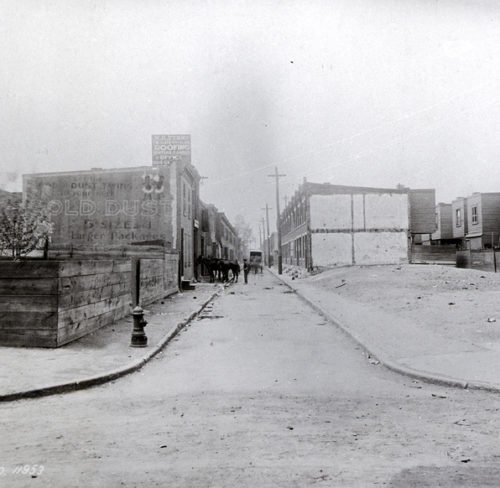
Annin Street in 1916, focal point of the
South Philadelphia Riot in 1918
(Image Ownership: Public domain)
Bond was wary of her white neighbors — and for good reason. A month earlier, racial strife erupted about a mile north on Pine Street when white residents burned the furniture of a Black family who had moved into the neighborhood. G. Grant Williams, editor of the Black-owned Philadelphia Tribune, urged Black residents to protect their homes against “the scum of Erin’s sod….”
On, Friday, July 26 — the same day Woodrow Wilson released a statement condemning mob violence and lynchings — about 100 white residents gathered outside Bond’s new house. When 23-year-old Joseph Kelly chucked a rock through Bond’s window, she fired a warning shot to alert the police.
In the ensuing chaos, Kelly suffered a leg wound, though Bond claimed she fired into the air and it couldn’t have been from her pistol….
At one point, the Philadelphia Inquirer blared, the South Philadelphia “race war” involved 5,000 combatants and had metastasized into “the most terrific and bitter race riot that has ever taken place in this city.” The riot area covered 2 square miles of Grays Ferry and neighboring Point Breeze, according to the paper, and left scores of homes damaged.
Sunday and Monday would feature the heaviest and deadliest fighting, with mobs of white people ransacking the homes of Black people and confronting Black residents. Groups of Black residents fought back, and at one point, the Inquirer wrote, “Federal street was a seething mass of Black and white bodies, swinging from one side of the street to the other.”
Read the full article here.
Read more Breaking News here.
View more galleries from the ABHM here.
Comments Are Welcome
Note: We moderate submissions in order to create a space for meaningful dialogue, a space where museum visitors – adults and youth –– can exchange informed, thoughtful, and relevant comments that add value to our exhibits.
Racial slurs, personal attacks, obscenity, profanity, and SHOUTING do not meet the above standard. Such comments are posted in the exhibit Hateful Speech. Commercial promotions, impersonations, and incoherent comments likewise fail to meet our goals, so will not be posted. Submissions longer than 120 words will be shortened.
See our full Comments Policy here.