Wisconsin Republicans Want Supreme Court To Block Map That Adds A Black-Majority District
Share
Explore Our Galleries









Breaking News!
Today's news and culture by Black and other reporters in the Black and mainstream media.
Ways to Support ABHM?
By Paul Blumenthal, Huff Po
One voting rights expert called the state redistricting challenge from GOP legislators “an aggressive move … weaved in with a bunch of cynicism.”
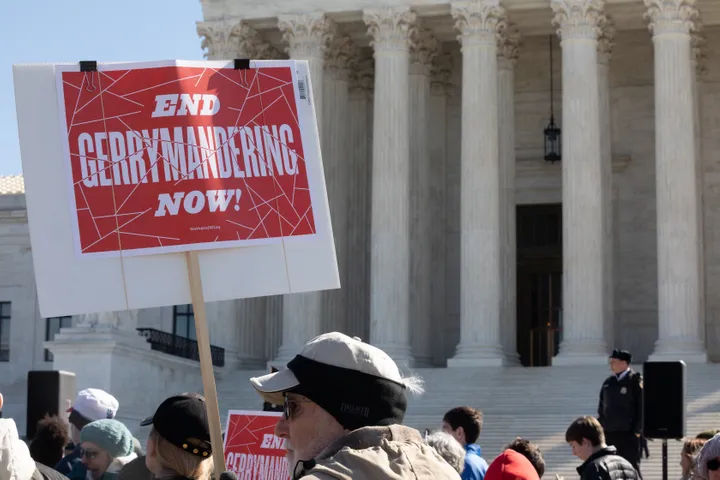
Republicans in the Wisconsin Legislature filed an emergency application with the U.S. Supreme Court on March 3, arguing that a new map of state legislative districts selected by the state’s Supreme Court violates the Voting Rights Act.
State Republicans argue that the redistricting plan constitutes a “21st century racial gerrymander.” In their filing to the U.S. Supreme Court, they argue that the map dilutes Black voting power by reducing the overall percentage of Black voters in each district.
But those percentages were reduced in order to add a seventh Black-majority district in Milwaukee.
This argument is “a little odd” coming from Republicans, said Mark Gaber, senior director of redistricting at the Campaign Legal Center, a nonprofit that represented clients in the state litigation who favored the creation of a seventh Black district. That’s because the map the Republican-controlled state legislature initially drew, and wants the Supreme Court to adopt, reduced the number of Black-majority districts from six to five.
“It’s a very aggressive move, and it’s weaved in with a bunch of cynicism,” Gaber said.
Though the Republicans’ argument that the court should reduce Black voting power on the legal basis that the alternative harmed Black voters appears to be particularly cynical, it fits with the Republican Party’s efforts to reduce Black voting power across the country.
Get the details about this latest political maneuver on HuffPo.
This isn’t the first time Republicans have tried to suppress the Black vote in Wisconsin. The GOP in North Carolina isn’t innocent when it comes to gerrymandering, either. Discover more in our Struggle for Justice exhibit.
Our breaking black news keeps you in the know.
Comments Are Welcome
Note: We moderate submissions in order to create a space for meaningful dialogue, a space where museum visitors – adults and youth –– can exchange informed, thoughtful, and relevant comments that add value to our exhibits.
Racial slurs, personal attacks, obscenity, profanity, and SHOUTING do not meet the above standard. Such comments are posted in the exhibit Hateful Speech. Commercial promotions, impersonations, and incoherent comments likewise fail to meet our goals, so will not be posted. Submissions longer than 120 words will be shortened.
See our full Comments Policy here.