Why more Black people are looking for safety in gun ownership
Share
Explore Our Galleries









Breaking News!
Today's news and culture by Black and other reporters in the Black and mainstream media.
Ways to Support ABHM?
By Curtis Bunn, NBC News
A rise in hate crimes and anti-Black vitriol sparked a 58 percent increase in Black people purchasing firearms in 2020. The spike seems to have continued.
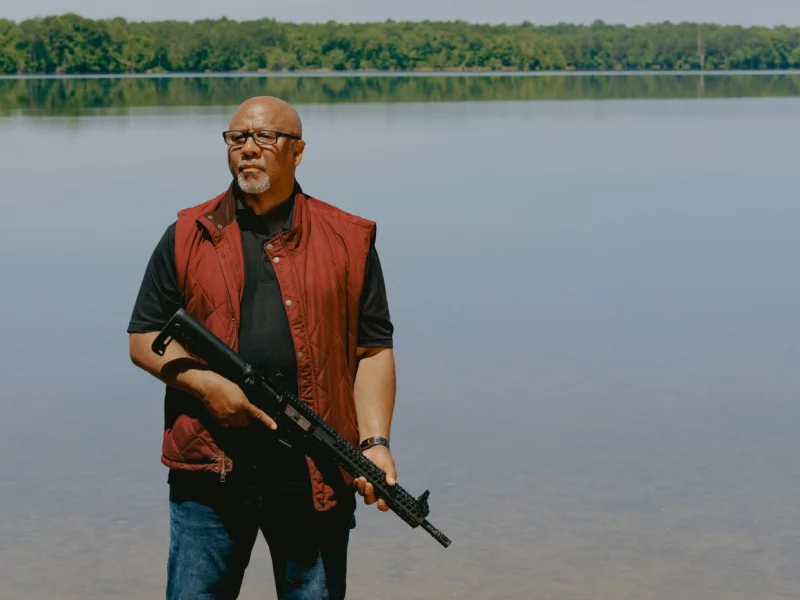
Two days after a white man shot and killed 10 Black people in Buffalo last month, Michael Moody reversed his thinking about possessing a firearm. He had watched the aftermath of the carnage on the news, the anguish of the victims’ families, and decided he “needed a gun. Needed, not wanted,” he said.
After discussing it with his wife, Moody said he left his home in suburban Washington to buy a weapon. He quickly learned he wasn’t alone. He said he was “stunned” at the number of Black people standing in line at the gun shop in Maryland to make a similar purchase.
Through chatting with others while waiting, Moody said he learned “a lot of us have the same idea. It’s getting bad when someone specifically targets Black people to shoot. We have to be prepared to fight back. And you can’t survive bringing a knife to a gunfight.”
Moody’s sentiments represent one reason the sale of guns to Black Americans rose 58 percent in 2020 — the year George Floyd was murdered by a Minnesota police officer, sparking a nationwide social justice movement — according to the National Shooting Sports Foundation, a firearms trade association. It was the highest bump in gun sales of any ethnic group that year…
“And you wonder why?” said Moody, who works for the federal government. “You look at Buffalo and the feeling of ‘This could have been me’ is there. We could be the next target. And when it’s you, what are you going to do? Are you going to run and hide? Or are you going to be able to protect yourself? Protect your family? I didn’t want a gun; I’m not a gun person. But this world has made me get one. Getting one for my wife next.”
Read more about the connection between increasing hate crimes and Black gun ownership.
Many believe the shooting in Buffalo is a perfect example of terrorism inspired by America’s racism.
Keep apprised of issues impacting the Black community.
Comments Are Welcome
Note: We moderate submissions in order to create a space for meaningful dialogue, a space where museum visitors – adults and youth –– can exchange informed, thoughtful, and relevant comments that add value to our exhibits.
Racial slurs, personal attacks, obscenity, profanity, and SHOUTING do not meet the above standard. Such comments are posted in the exhibit Hateful Speech. Commercial promotions, impersonations, and incoherent comments likewise fail to meet our goals, so will not be posted. Submissions longer than 120 words will be shortened.
See our full Comments Policy here.