Why Black-Eyed Peas Still Matter on New Year’s Day
Share
Explore Our Galleries









Breaking News!
Today's news and culture by Black and other reporters in the Black and mainstream media.
Ways to Support ABHM?
by Nehemiah Frank, The Black Wall Street Times
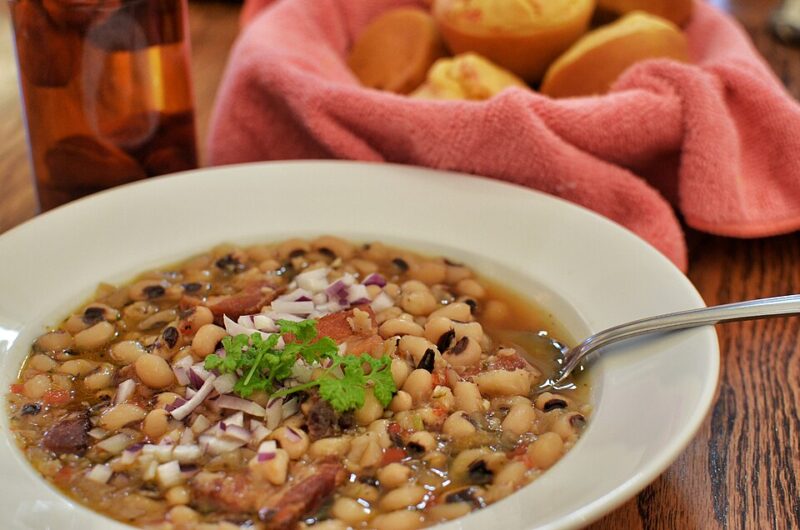
.jpg)
jeffreyw, CC BY 2.0, via Wikimedia Commons)
As families across the country ring in the New Year, many African American households will do so with a familiar dish on the table: black-eyed peas. Often paired with collard greens and cornbread, the meal is widely described as a symbol of luck and prosperity. But its meaning runs far deeper than superstition.
The tradition of eating black-eyed peas on New Year’s Day is rooted in African heritage, shaped by slavery, and sustained by generations of Black survival in America.
A West African Legacy
Black-eyed peas originated in West Africa, where they were cultivated long before the trans-Atlantic slave trade. When Africans were forcibly taken to the Americas, the peas traveled with them, packed onto slave ships because of their durability and nutritional value.
What crossed the Atlantic was not just food, but knowledge. Enslaved Africans brought agricultural expertise—how to grow, store, and cook black-eyed peas under harsh conditions. That knowledge would prove critical to survival in a new land designed to extract labor, not preserve Black life.
Food as Survival Under Slavery
On Southern plantations, black-eyed peas were often issued as rations or grown in small garden plots maintained by enslaved people themselves. Cheap, filling, and resilient, the peas became a dietary staple for those denied access to abundance.
In this context, black-eyed peas were not celebratory. They were necessary. They sustained Black people through scarcity and the systematic stripping of dignity.
Over time, survival itself became symbolic.
After Emancipation, a New Meaning
Following emancipation, formerly enslaved people continued cooking black-eyed peas as a sign of continuity and self-determination.
Learn more about Africa before captivity.
Comments Are Welcome
Note: We moderate submissions in order to create a space for meaningful dialogue, a space where museum visitors – adults and youth –– can exchange informed, thoughtful, and relevant comments that add value to our exhibits.
Racial slurs, personal attacks, obscenity, profanity, and SHOUTING do not meet the above standard. Such comments are posted in the exhibit Hateful Speech. Commercial promotions, impersonations, and incoherent comments likewise fail to meet our goals, so will not be posted. Submissions longer than 120 words will be shortened.
See our full Comments Policy here.