British crown was world’s largest buyer of enslaved people by 1807, book reveals
Share
Explore Our Galleries









Breaking News!
Today's news and culture by Black and other reporters in the Black and mainstream media.
Ways to Support ABHM?
Chris Osuh, The Guardian
Author of The Crown’s Silence tells how navy and monarchy protected slave trade for hundreds of years
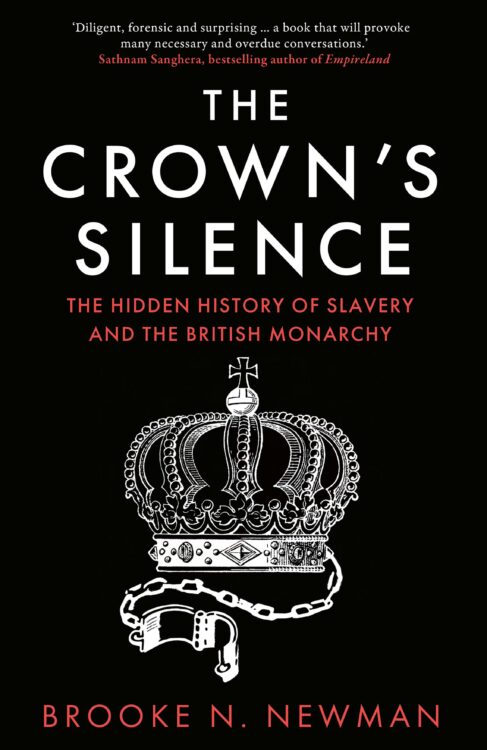
The British crown and the navy expanded and protected the trade in enslaved African people for hundreds of years, unprecedented research into the monarchy’s historical ties to slavery has found.
The Crown’s Silence, a book by the historian Brooke Newman, follows the Guardian’s 2023 Cost of the crown report, which explored the British monarchy’s hidden ties to transatlantic slavery.
The book reveals that by 1807, when Britain abolished the slave trade in its empire, the British crown had become the world’s largest buyer of enslaved people, buying 13,000 men for the army for £900,000.
Buckingham Palace does not comment on books, but a source said King Charles, who has previously spoken of “personal sorrow” at the suffering caused by slavery, took the matter “profoundly seriously”.
Newman said she had started working on the book 10 years ago, having found “secret correspondence” detailing George IV’s fears of an uprising like the Haitian Revolution happening in Jamaica. She made the discovery while researching an earlier work about the Caribbean island, which was a British colony for more than 300 years.
Newman, who is an associate professor at Virginia Commonwealth University in the US, researched royal archives and manuscripts relating to the Royal Navy, colonial officers, government officials, the Royal African Company and the South Sea Company for The Crown’s Silence.
She said: “The crown used to trumpet their connections to the transatlantic slave trade. They put the royal brand on this practice and literally on people’s bodies.”
Read more about the British monarchy’s connection to slavery.
Learn more about the Transatlantic slave trade.
Comments Are Welcome
Note: We moderate submissions in order to create a space for meaningful dialogue, a space where museum visitors – adults and youth –– can exchange informed, thoughtful, and relevant comments that add value to our exhibits.
Racial slurs, personal attacks, obscenity, profanity, and SHOUTING do not meet the above standard. Such comments are posted in the exhibit Hateful Speech. Commercial promotions, impersonations, and incoherent comments likewise fail to meet our goals, so will not be posted. Submissions longer than 120 words will be shortened.
See our full Comments Policy here.