What is a “Black Name”?
Share
Explore Our Galleries









Breaking News!
Today's news and culture by Black and other reporters in the Black and mainstream media.
Ways to Support ABHM?
By Jamelle Bouie, TheDailyBeast
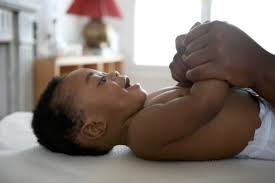
Reddit isn’t just a clearinghouse for interviews, animal pictures, and crazy stories. It’s also a place where people ask questions and have discussions. […] One user wondered about “black” names, posing a question to the “Black American parents of Reddit,” as he put it. “Before racism is called out, I have plenty of black friends,” he noted, raising the question of why he didn’t ask these alleged friends. “[I’m] just curious why you name your kids names like D’brickishaw, Barkevious D’quell and so on?”
Setting aside the many problems with this question—for one, “Black American parents” aren’t a monolith–there’s an actual answer here. In a 2003 paper for the National Bureau of Economic Research, economist Roland Fryer found two things. First, that names like Reginald and Kiara are far more likely among black children than names like Jake and Molly, and second, that this is a recent development. In the 1960s, Anglo-American names were common among African American children. It wasn’t until the 1970s and the rise of the Black Power movement that this shifted in the other direction. ”The underlying philosophy of the Black Power movement,“ writes Fryer, ”was to encourage Blacks to accentuate and affirm black culture and fight the claims of black inferiority.” The adoption of “black” names is consistent with other cultural changes—like “natural hair”—prompted by the movement. African Americans wanted to distinguish themselves from whites, and naming was an easy means to the end.
Of course, there are plenty of African Americans who give their kids Anglo names. The idea that they don’t—that all black parents use the same naming convention—is ridiculous.
[…]
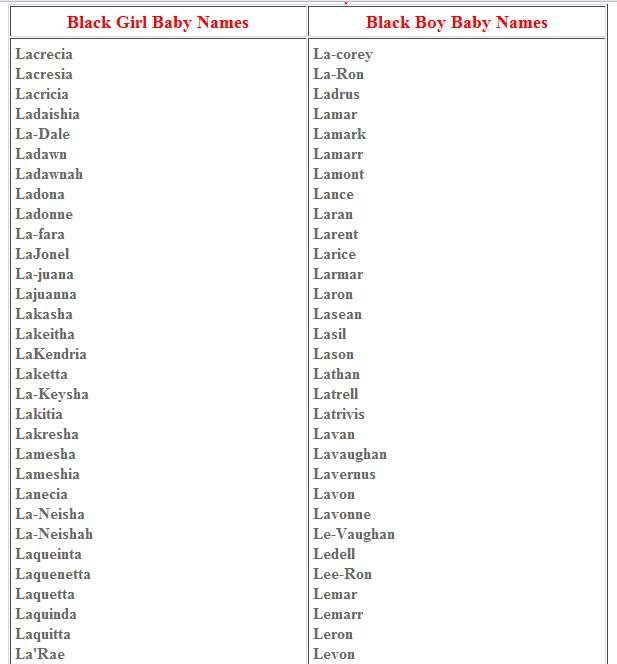
If there is a question worth asking about race and naming, it’s not “why do black people use these names?” it’s “why do we only focus on black people in these conversations?” Indeed, there’s a whole universe of (hacky) jokes premised on the assumed absurdity of so-called “ghetto” names. Derision for these names—and often, the people who have them—is culturally acceptable.
[…]
It should be said that this has material consequences in the real world. Research has consistently found that job applicants with “black-sounding” names are more likely to be rejected, regardless of qualifications. If races are our castes, then this makes sense, since—in a caste system—your status is mostly a function of your position. “Latoya” could be well-qualified for the law firm she applies to, but there’s a fair chance her “black” name marks her as undesirable.
To read the full article, click here.
To read more breaking news, click here.
Comments Are Welcome
Note: We moderate submissions in order to create a space for meaningful dialogue, a space where museum visitors – adults and youth –– can exchange informed, thoughtful, and relevant comments that add value to our exhibits.
Racial slurs, personal attacks, obscenity, profanity, and SHOUTING do not meet the above standard. Such comments are posted in the exhibit Hateful Speech. Commercial promotions, impersonations, and incoherent comments likewise fail to meet our goals, so will not be posted. Submissions longer than 120 words will be shortened.
See our full Comments Policy here.