Veterans Day: 100 Vintage Photos Of Black Soldiers Fighting Wars For America
Share
Explore Our Galleries









Breaking News!
Today's news and culture by Black and other reporters in the Black and mainstream media.
Ways to Support ABHM?
By Bruce C.T. Wright, NewsOne
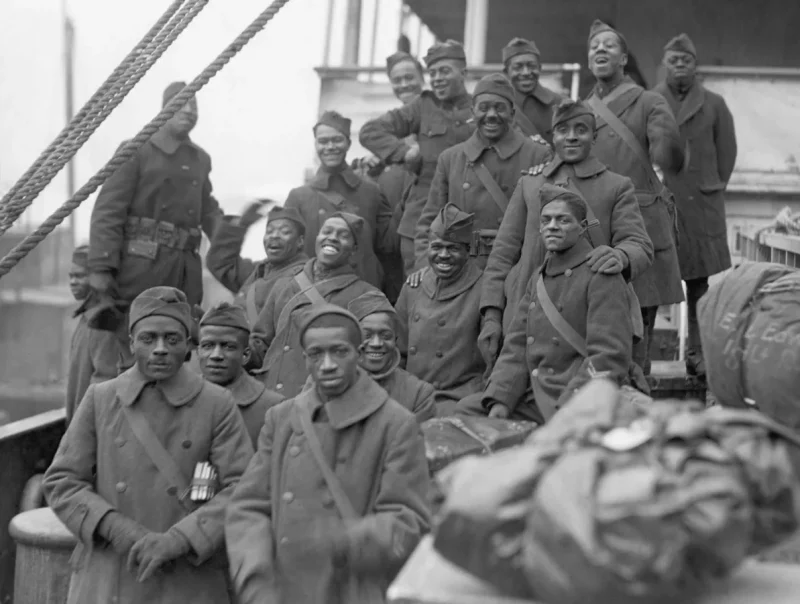
As the country pauses to observe Veterans Day, it’s important to remember that the history of especially Black people in the American military is a complicated one. On its surface, it’s yet another one of the countless ways that Black people have helped build this country and keep it safe. However, beneath that veneer lies some ugly truths that haunt the U.S. military’s legacy to this day.
And while much of that has to do with Black soldiers‘ time enlisted in the armed forces, the way that Black veterans have largely been treated has been the subject of much scrutiny since Crispus Attucks became the first American casualty of the Revolutionary War.
During the War of 1812, Black soldiers helped defeat the British in New Orleans. By the end of the Civil War, 10 percent of the union forces were Black. The 54th regiment, which was an all-Black fighting unit, was immortalized in the movie “Glory” and fought a number of important battles, eventually losing more than half of its troops. Two of Frederick Douglass’ sons also fought in the Civil War and Harriet Tubman severed as a scout for the 2nd South Carolina Volunteers.
During World War I, Black soldiers were given full citizenship, although they still fought in segregated units. Many credit Black soldiers for bringing jazz music to Europe and France.
In World War II, Black soldiers had an increased presence. The NAACP pushed for the War Department to form the all-Black 99th Pursuit Squadron of the U.S. Army Air Corps, otherwise known as the Tuskegee Airmen, the only U.S. unit to ever sink a German destroyer. Like the 54th Regiment, the Tuskegee Airmen were immortalized in a movie of the same name.
Heads to NewsOne for all the photos.
While Black soldiers have often been forgotten, some stories are now being told.
Our breaking news archive pays homage to people like this.
Comments Are Welcome
Note: We moderate submissions in order to create a space for meaningful dialogue, a space where museum visitors – adults and youth –– can exchange informed, thoughtful, and relevant comments that add value to our exhibits.
Racial slurs, personal attacks, obscenity, profanity, and SHOUTING do not meet the above standard. Such comments are posted in the exhibit Hateful Speech. Commercial promotions, impersonations, and incoherent comments likewise fail to meet our goals, so will not be posted. Submissions longer than 120 words will be shortened.
See our full Comments Policy here.