Under Trump, Justice Department Resumes Fight for White Privilege
Share
Explore Our Galleries









Breaking News!
Today's news and culture by Black and other reporters in the Black and mainstream media.
Ways to Support ABHM?
By Charlene Crowell, Black Press USA

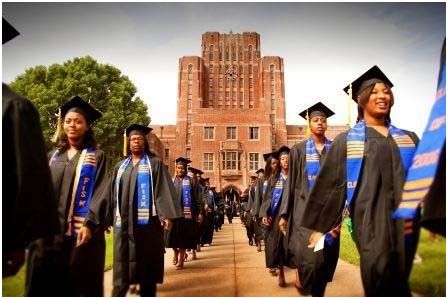
As millions of students return to school, the nation’s Justice Department (DOJ) is beginning an investigation that could potentially sue universities over affirmative action admissions policies.
[…]
For Black people and other ethnic and racial minorities, this investigation seems like window-dressing to deny millions of students a quality education in the name of injustice.
Such actions also signal a more subtle message is to roll back to the progress achieved in broadly affording students of all races and ethnicities the benefits that higher education derives.
[…]
“The American Dream offers each new generation the opportunity to build on the successes of previous ones,” wrote Nikitra Bailey, an executive vice president with the Center for Responsible Lending, in a related op-ed. “However, if you are African-American, the nation’s history of enslavement and legal bigotry consistently requires each generation to start anew.”
“If it passes, we are announcing to the world that women and minorities will not be given an equal opportunity to succeed in business in our state,” said Hillegonds. “This is the wrong message to send at a time when we are trying to attract new businesses and develop a talented, multicultural workforce ready to meet the demands of the 21st century economy.”
State-approved bans on affirmative action in higher education also led to fewer Black students in the University of California system as well as at the University of Michigan at Ann Arbor.
Today the real difference between then and now is that the U.S. Justice Department is resuming a fight for the preservation of White privilege that is armed with resources and personnel that taxpayers of all colors provide.
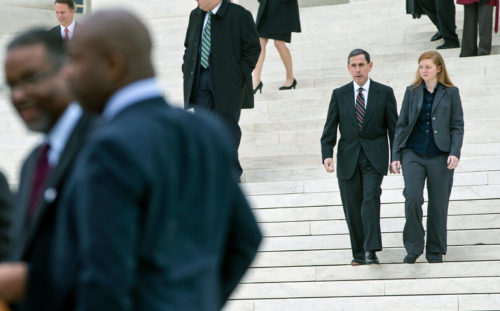
The United States Supreme Court recently affirmed the use of affirmative action in admissions decisions in the “Fisher v. University of Texas” case. In that ruling, the importance of diversity as a compelling state interest was affirmed as settled law. The decision was also a victory for equal opportunity and recognized again that it is critical for schools to create diverse and inclusive student bodies.
As the cost of higher education tends to increase every year, students of color are the ones most likely to go into debt in search of a degree that will deliver a middle class standard of living. Even four years after graduation, Black college graduates earning a bachelor’s degree owe almost double the debt of their White classmates, according to CRL research.
“The U.S. Justice Department must enforce inclusive educational policies as they open the doors of opportunity for all,” said Bailey.
Read the full article here.
Read more on Affirmative Action here.
Read more Breaking News here.
Read more about National Newspapers Publishers Association here.
Comments Are Welcome
Note: We moderate submissions in order to create a space for meaningful dialogue, a space where museum visitors – adults and youth –– can exchange informed, thoughtful, and relevant comments that add value to our exhibits.
Racial slurs, personal attacks, obscenity, profanity, and SHOUTING do not meet the above standard. Such comments are posted in the exhibit Hateful Speech. Commercial promotions, impersonations, and incoherent comments likewise fail to meet our goals, so will not be posted. Submissions longer than 120 words will be shortened.
See our full Comments Policy here.