UK stole 25m years of life and labour through slavery in Barbados, says report
Share
Explore Our Galleries









Breaking News!
Today's news and culture by Black and other reporters in the Black and mainstream media.
Ways to Support ABHM?
Experts put estimate for economic harm done by 200 years of chattel slavery at $2tn, but stress this is ‘not an invoice’
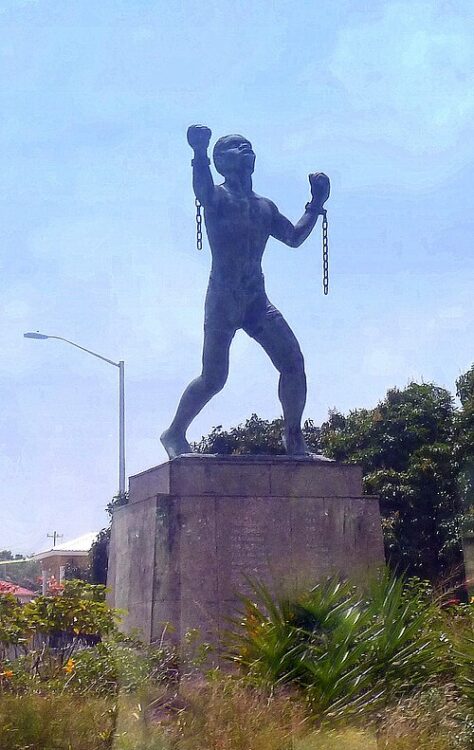
Britain stole 25 million years of life and labour through slavery in Barbados, according to research by a team of international experts.
Their report concludes that Barbados’s population of African descent have suffered damages estimated at up to $2tn (£1.5tn) from 200 years of chattel slavery.
The head of the research team, Coleman Bazelon, said the total reflected the magnitude of the damage done, but he emphasised that the figure was not a bill for damages but the factual foundation for dialogue.
“This research is not creating an invoice for anybody to pay,” said Bazelon. “It is an accounting of the harm that was done … a recognition of the harm that was done that is the starting point for reconciliation.”
Barbados was the first major British colony to force enslaved people to work on its plantations from the early 1600s. It is also a founding nation of the Caribbean Community (Caricom) which advocates for reparations.
Bazelon was the lead co-author of the 2023 Brattle analysis, which was included in the report on reparations for transatlantic chattel slavery in the Americas and the Caribbean. The analysis estimated that chattel slavery affected 19.9 million people, including those who were captured, those who lost their lives while being transported from Africa, and those who worked on plantations and their descendants.
[…]
Bazelon conducted this new research through the non-profit organisation Public Interest Experts. “What they asked me to focus on was: what was the value of the labour stolen through slavery in Barbados,” Bazelon said.
Speaking at an event in Barbados to preview the research earlier this month, Barbados’s minister for pan-African affairs and heritage, Trevor Prescod, said: “You can’t erase history … My job is to give an Afrocentric redress to the imbalances that occurred during the period of slavery.”
See what’s next for the report and its authors.
The enslaved arrived in Barbados after The Middle Passage.
Comments Are Welcome
Note: We moderate submissions in order to create a space for meaningful dialogue, a space where museum visitors – adults and youth –– can exchange informed, thoughtful, and relevant comments that add value to our exhibits.
Racial slurs, personal attacks, obscenity, profanity, and SHOUTING do not meet the above standard. Such comments are posted in the exhibit Hateful Speech. Commercial promotions, impersonations, and incoherent comments likewise fail to meet our goals, so will not be posted. Submissions longer than 120 words will be shortened.
See our full Comments Policy here.