‘This Is Our Selma’: NC’s Fight for Voting Rights
Share
Explore Our Galleries









Breaking News!
Today's news and culture by Black and other reporters in the Black and mainstream media.
Ways to Support ABHM?
By Danielle C. Belton, theRoot
Monday marks the start of a pivotal voting-rights trial in North Carolina. On the line? Access to the ballot box for tens of thousands of African-American voters.
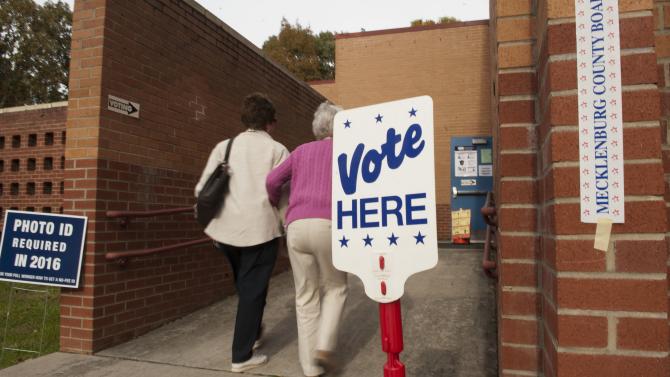
Calling the trial its “Selma,” referencing the Selma-to-Montgomery marches of 1964 in Alabama, the North Carolina State Conference of the NAACP is taking Gov. Pat McCrory to court for signing into law what many have called one of the strictest voting laws passed in the country.
Back in 2013—in the wake of the Supreme Court’s Shelby v. Holder decision, which gutted portions of the Voting Rights Act—the North Carolina Legislature passed H.B. 589, a voter-suppression law that drastically changed or wiped out many provisions meant to encourage voter turnout and provide easier access to the ballot box. The law instituted a voter-ID requirement, shortened early voting by a week, got rid of same-day registration, expanded the state’s ability to challenge voters, killed a preregistration program for 16- and 17-year-olds, and disallowed the counting of provisional ballots cast out-of-precinct, among other changes.
Critics say that these restrictions disproportionately affect African Americans. According to state data, back in 2012, 70 percent of black North Carolina voters used early voting, and while blacks only make up about 22 percent of the voting population in the state, they accounted for 41 percent of voters who took advantage of same-day registration. African Americans also made up 30 percent of those who cast ballots out-of-precinct.
Last year, these laws directly impacted the midterm elections, with reports of between30,000 and 50,000 being ineligible to vote because of the law.
[…]
In its charge against H.B. 589, the North Carolina NAACP is being represented by attorneys with racial-justice nonprofit Advancement Project, the law firm Kirkland & Ellis, and lawyers Irving Joyner and Adam Stein. They’re charging that the law violates the 14th and 15th amendments of the U.S. Constitution. The Rev. William J. Barber II, president of the North Carolina NAACP, has said repeatedly of the state’s voting-rights case: “This is our Selma.”
“North Carolina was the first state to pass a restrictive voting law after the Supreme Court weakened the Voting Rights Act in 2013, and it is the worst voter-suppression law the country has seen since 1965,” Barber said in a July 8 press release. “The people of North Carolina are standing up—in the courts and the streets—because we refuse to accept the revival of Jim Crow tactics used to block access to the ballot for African-American and Latino voters.”
Read the full article here.
Read more Breaking News here.
Comments Are Welcome
Note: We moderate submissions in order to create a space for meaningful dialogue, a space where museum visitors – adults and youth –– can exchange informed, thoughtful, and relevant comments that add value to our exhibits.
Racial slurs, personal attacks, obscenity, profanity, and SHOUTING do not meet the above standard. Such comments are posted in the exhibit Hateful Speech. Commercial promotions, impersonations, and incoherent comments likewise fail to meet our goals, so will not be posted. Submissions longer than 120 words will be shortened.
See our full Comments Policy here.