The War in Africa the U.S. Military Won’t Admit It’s Fighting
Share
Explore Our Galleries









Breaking News!
Today's news and culture by Black and other reporters in the Black and mainstream media.
Ways to Support ABHM?
By: Bryan Maygers huffingtonpost.com
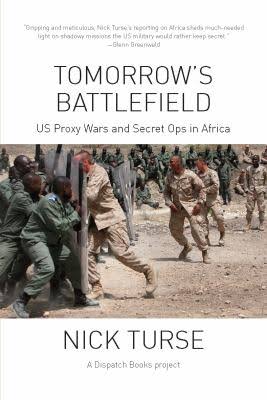
“What the military will say to a reporter and what is said behind closed doors are two very different things — especially when it comes to the U.S. military in Africa.” So writes investigative reporter Nick Turse in his latest book, Tomorrow’s Battlefield: U.S. Proxy Wars and Secret Ops in Africa….
TOMDISPATCH.COM
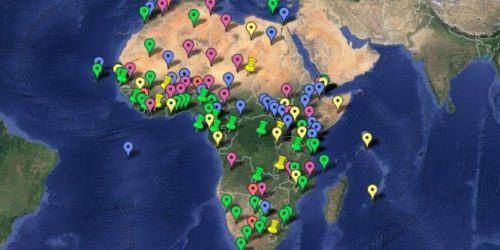
When asked for a simple tally of U.S. installations, military spokespersons repeatedly emphasized to Turse that the command maintains only one permanent “base,” Camp Lemonnier in Djibouti, contradicting documentary evidence of activity and infrastructure on a much larger and rapidly growing scale.
Turse’s investigations eventually showed that the U.S. military has been involved in one way or another — “construction, military exercises, advisory assignments, security cooperation, or training missions” — with more than 90 percent of Africa’s 54 nations….
 A few years back I asked a few of their public affairs people to answer a few simple questions about what the U.S. military was up to on the continent, the basics of the scale and scope of their involvement. I had started seeing indications of increased U.S. operations.
Specifically, I saw the building of a sophisticated logistics network and I know that you don’t build a land and sea logistics network to carry supplies all throughout the continent unless you’re planning on sending personnel all over the continent….
I think a good example of this in Africa is the U.S. intervention in Libya where we joined a coalition to overthrow Gaddafi. Now I don’t think there are a lot of Gaddafi defenders out there, we know that he was in many ways a disaster for his people, but what’s resulted in Libya has been catastrophic and it wasn’t just Libya that was affected….
The Libyan intervention has now destabilized the whole Northwest corner of Africa. This is the type of thing that we see again and again with U.S. military missions in Africa….
There’s just not a deep knowledge of who the players are often and what their aims are. And of course the U.S. military, they have one tool in their toolkit which is the hammer. So this is what they bring to bear wherever they see a problem and often it just has the effect of creating even more chaos in the name of fighting terror or creating stability….
Credit:amazon.com
The Obama administration has basically been in a reaction mode for almost the entirety of the administration, they seem to be buffeted by one crisis after another and try to react to it, often in tragic and misguided ways….
Instead of getting the military they wanted for South Sudan, they got one that in December 2013 broke down and split across ethnic lines. The force that’s still loyal to the government carried out mass atrocities and also began increased recruitment of child soldiers. So everything that the U.S. tried for there was a complete and abject failure….
There are Chinese construction projects everywhere and you can see a real contrast. The U.S. has really pumped its aid money into these various anti-terror efforts and tried to play Whac-A-Mole all across the continent, chasing down terror groups while China has gone the economic route and made inroads all over the continent.
Now I wouldn’t say that the Chinese approach has been uniformly good for African countries, they have these no-strings-attached policies where labor rights and environmental rights are cast by the wayside and it’s strictly dollars and cents, but what they do is provide roads and airports and stadiums, tangible examples of things that African people can see right in front of them.
They’re pursuing a radically different route than we have, though you know recently it looks like China might be looking to follow our example. They’re looking at building a military base in Djibouti where the major U.S. base is, and they found a way under UN auspices to get Chinese troops into South Sudan to protect oil installations, so it’s possible that China will run into the same problems, given enough time, but right now the U.S. seems to be sowing more problems for itself as it goes while China reaps economic rewards.
I don’t see any indication that they’re going to be slowing down any time soon.
Comments Are Welcome
Note: We moderate submissions in order to create a space for meaningful dialogue, a space where museum visitors – adults and youth –– can exchange informed, thoughtful, and relevant comments that add value to our exhibits.
Racial slurs, personal attacks, obscenity, profanity, and SHOUTING do not meet the above standard. Such comments are posted in the exhibit Hateful Speech. Commercial promotions, impersonations, and incoherent comments likewise fail to meet our goals, so will not be posted. Submissions longer than 120 words will be shortened.
See our full Comments Policy here.