The Voting Rights Act is facing the biggest threats in its 60 years
Share
Explore Our Galleries









Breaking News!
Today's news and culture by Black and other reporters in the Black and mainstream media.
Ways to Support ABHM?
By George Chidi, The Guardian
Decades after its passage, the revolutionary law continues to face attempts to pervert its purpose
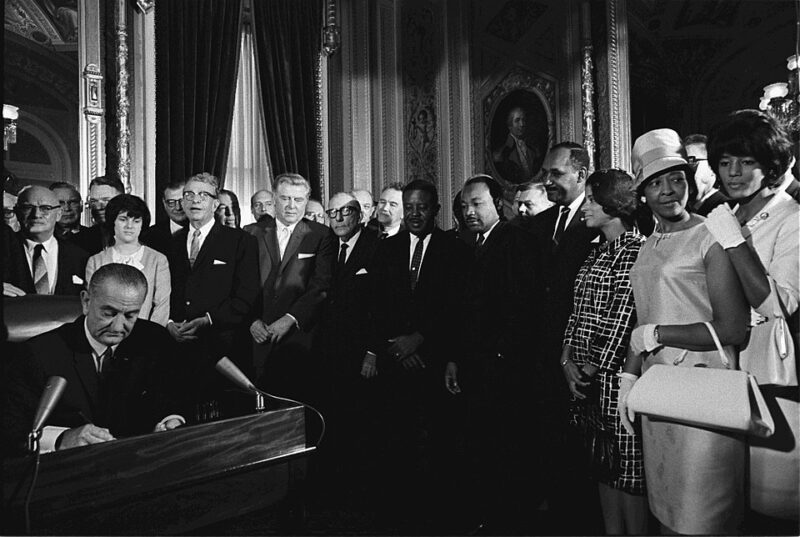

Facing images of violent white mobs defending racial segregation, the condemnation of the world and of its own citizens, Congress in 1965 passed the Voting Rights Act, a law meant to end the hypocrisy of a democratic country that denied Black people the power of their vote.
Sixty years later, race remains at the center of American politics. Cases before the US supreme court, and a platoon of Texas legislators fleeing the state to prevent redistricting, demonstrate how the Voting Rights Act – and its erosion – remains on the frontline of the political battlefield.
“Democracy is at stake,” said Todd Cox, associate director-counsel for the NAACP Legal Defense Fund. Even as voting rights advocates use the act to win additional congressional representation in Alabama and press cases in Louisiana and North Carolina, a conservative supreme court makes gains precarious, he said.
“We wouldn’t be under such a threat if we weren’t doing so well in making sure our communities were engaged, that they were turning out and that their rights were protected,” Cox said. “This is a cyclical part of history, that when we see some success in advancing rights, there’s always backlash.”
Discover more about the Civil Rights Movement.
Comments Are Welcome
Note: We moderate submissions in order to create a space for meaningful dialogue, a space where museum visitors – adults and youth –– can exchange informed, thoughtful, and relevant comments that add value to our exhibits.
Racial slurs, personal attacks, obscenity, profanity, and SHOUTING do not meet the above standard. Such comments are posted in the exhibit Hateful Speech. Commercial promotions, impersonations, and incoherent comments likewise fail to meet our goals, so will not be posted. Submissions longer than 120 words will be shortened.
See our full Comments Policy here.