The Many Political Interpretations of Martin Luther King Jr.’s Legacy
Share
Explore Our Galleries









Breaking News!
Today's news and culture by Black and other reporters in the Black and mainstream media.
Ways to Support ABHM?
By Kurt Streeter, New Yorks Times
The release of National Archives documents is the latest attempt to define what the Civil Rights icon believed, and what that means now for the country.
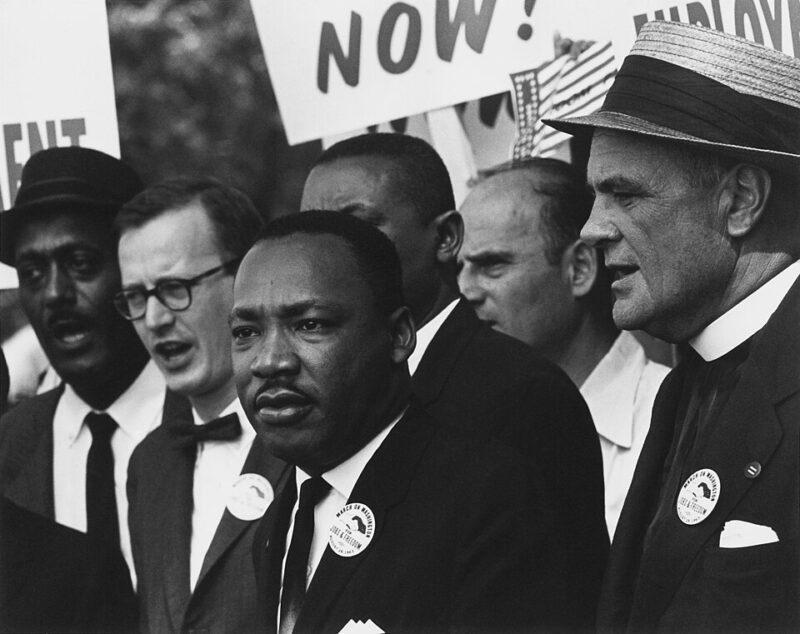
The enduring legacy of the Rev. Dr. Martin Luther King Jr. has long existed as a powerful, yet pliant, force in American public life.
Even during his early rise, political figures understood the potency of aligning with, or opposing, King’s moral authority. John F. Kennedy, for instance, gained political advantage during a tight 1960 presidential race by intervening on King’s behalf after an Atlanta arrest, forging crucial links with Black voters. Years later, Richard Nixon considered reaching out to King, but instead found political mileage in casting the civil rights leader as a rabble-rousing lawbreaker, solidifying Nixon’s “law and order” image.
The dynamic of selective engagement and strategic distortion cropped up once again this week with the Trump administration’s disclosure of documents from the National Archives related to King. The surprise release, at a time when the White House has been seeking to redirect attention from the Jeffrey Epstein controversy, reignited the longstanding debate over King’s contested narrative.
This disclosure, which brought few new revelations, was particularly anticipated by people who look for signs that King’s assassination was orchestrated, or that King himself was not the flawless moral figure he is often portrayed to be.
King’s daughter, Bernice King, observed in a statement after the files’ release that “a 1967 poll reflected that he was one of the most hated men in America.” She added that “many who quote him now and evoke him to deter justice today would likely hate, and may already hate, the authentic King.”
Those words point to a persistent truth, said Dr. John Kirk, a civil rights historian at the University of Arkansas at Little Rock. King’s monumental impact was never static, he said. Instead, it became a malleable narrative, continually reshaped by political forces across the ideological spectrum to serve their divergent aims.
Read more about that narrative.
Discover other Civil Rights activists.
Comments Are Welcome
Note: We moderate submissions in order to create a space for meaningful dialogue, a space where museum visitors – adults and youth –– can exchange informed, thoughtful, and relevant comments that add value to our exhibits.
Racial slurs, personal attacks, obscenity, profanity, and SHOUTING do not meet the above standard. Such comments are posted in the exhibit Hateful Speech. Commercial promotions, impersonations, and incoherent comments likewise fail to meet our goals, so will not be posted. Submissions longer than 120 words will be shortened.
See our full Comments Policy here.