The Great Land Robbery
Share
Explore Our Galleries









Breaking News!
Today's news and culture by Black and other reporters in the Black and mainstream media.
Ways to Support ABHM?
The shameful story of how 1 million black families have been ripped from their farms
By Vann R. Newkirk II, theatlantic.com
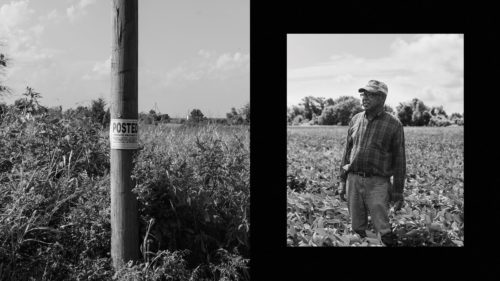
Zora J. Murff
I. Wiped Out
“You ever chop before?” Willena Scott-White was testing me. I sat with her in the cab of a Chevy Silverado pickup truck, swatting at the squadrons of giant, fluttering mosquitoes that had invaded the interior the last time she opened a window. I was spending the day with her family as they worked their fields just outside Ruleville, in Mississippi’s Leflore County. With her weathered brown hands, Scott-White gave me a pork sandwich wrapped in a grease-stained paper towel. I slapped my leg. Mosquitoes can bite through denim, it turns out.
The fields alongside us as we drove were monotonous. With row crops, monotony is good. But as we toured 1,000 acres of land in Leflore and Bolivar Counties, straddling Route 61, Scott-White pointed out the demarcations between plots. A trio of steel silos here. A post there. A patch of scruffy wilderness in the distance. Each landmark was a reminder of the Scott legacy that she had fought to keep—or to regain—and she noted this with pride. Each one was also a reminder of an inheritance that had once been stolen…
Fewer and fewer farms are still owned by actual farmers. Investors in boardrooms throughout the country have bought hundreds of thousands of acres of premium Delta land. If you’re one of the millions of people who have a retirement account with the Teachers Insurance and Annuity Association, for instance, you might even own a little bit yourself…
Fewer and fewer farms are still owned by actual farmers. Investors in boardrooms throughout the country have bought hundreds of thousands of acres of premium Delta land. If you’re one of the millions of people who have a retirement account with the Teachers Insurance and Annuity Association, for instance, you might even own a little bit yourself…
Read full article here
More about land loss here
More Breaking News
View more ABHM galleries here
Comments Are Welcome
Note: We moderate submissions in order to create a space for meaningful dialogue, a space where museum visitors – adults and youth –– can exchange informed, thoughtful, and relevant comments that add value to our exhibits.
Racial slurs, personal attacks, obscenity, profanity, and SHOUTING do not meet the above standard. Such comments are posted in the exhibit Hateful Speech. Commercial promotions, impersonations, and incoherent comments likewise fail to meet our goals, so will not be posted. Submissions longer than 120 words will be shortened.
See our full Comments Policy here.