The Birth of CORE
Share
Explore Our Galleries









Breaking News!
Today's news and culture by Black and other reporters in the Black and mainstream media.
Ways to Support ABHM?
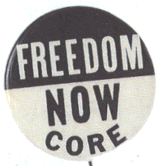
The Congress Of Racial Equality (CORE) was founded on this date in 1942. CORE is an American interracial voluntary organization established by James Farmer to undertake direct-action projects to improve race relations and end discriminatory policies.
Farmer had been working as the race-relations secretary for the Fellowship of Reconciliation, but resigned over a dispute in policy; he founded CORE as a vehicle for the nonviolent approach to combating racial prejudice that was inspired by Indian leader Mahatma Gandhi. CORE members held a sit-in at a coffee shop in Chicago in their founding year; it was one of the first of its kind in the United States. Other CORE projects have included voter registration drives in the South and actions to deal with a wide range of community issues in the North.
Read more about C.O.R.E. here.
Learn about Bayard Rustin, who worked with CORE.
Comments Are Welcome
Note: We moderate submissions in order to create a space for meaningful dialogue, a space where museum visitors – adults and youth –– can exchange informed, thoughtful, and relevant comments that add value to our exhibits.
Racial slurs, personal attacks, obscenity, profanity, and SHOUTING do not meet the above standard. Such comments are posted in the exhibit Hateful Speech. Commercial promotions, impersonations, and incoherent comments likewise fail to meet our goals, so will not be posted. Submissions longer than 120 words will be shortened.
See our full Comments Policy here.