Supreme Court Rebuffs Biden Administration Plea to Restore Multibillion-Dollar Student Debt Plan
Share
Explore Our Galleries









Breaking News!
Today's news and culture by Black and other reporters in the Black and mainstream media.
Ways to Support ABHM?
By Associated Press
The justices rejected their request to put the Biden plan that would have lowered payments for millions of borrowers back into effect.
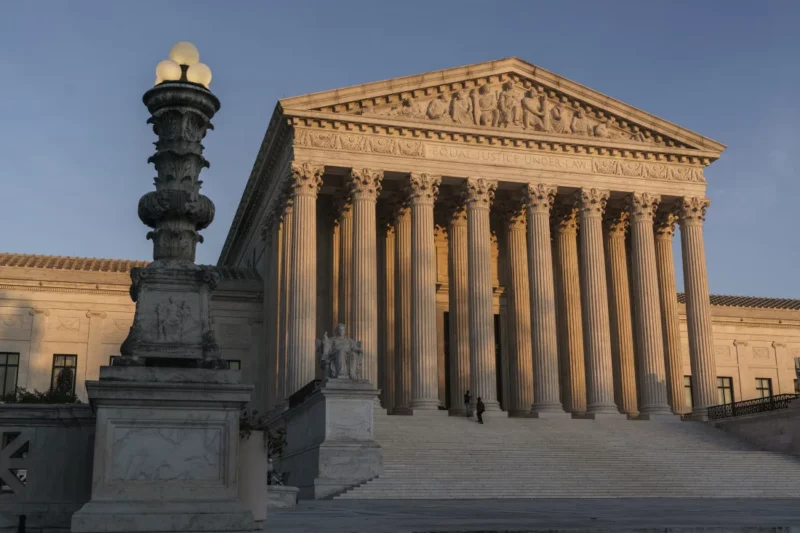
(J. Scott Applewhite/AP)
WASHINGTON (AP) — The Supreme Court on Wednesday kept on hold the latest multibillion-dollar plan from the Biden administration that would have lowered payments for millions of borrowers, while lawsuits make their way through lower courts.
The justices rejected an administration request to put most of it back into effect. It was blocked by the 8th U.S. Circuit Court of Appeals.
In an unsigned order, the court said it expects the appeals court to issue a fuller decision on the plan “with appropriate dispatch.”
The Education Department is seeking to provide a faster path to loan cancellation, and reduce monthly income-based repayments from 10% to 5% of a borrower’s discretionary income. The plan also wouldn’t require borrowers to make payments if they earn less than 225% of the federal poverty line — $32,800 a year for a single person.
Learn about the struggle for justice and equality across the 20th century.
Find more breaking news stories like this one here.
Comments Are Welcome
Note: We moderate submissions in order to create a space for meaningful dialogue, a space where museum visitors – adults and youth –– can exchange informed, thoughtful, and relevant comments that add value to our exhibits.
Racial slurs, personal attacks, obscenity, profanity, and SHOUTING do not meet the above standard. Such comments are posted in the exhibit Hateful Speech. Commercial promotions, impersonations, and incoherent comments likewise fail to meet our goals, so will not be posted. Submissions longer than 120 words will be shortened.
See our full Comments Policy here.