Special News Series: Rising Up For Justice! – Black Lives Matter but slavery isn’t our only narrative
Share
Explore Our Galleries









Breaking News!
Today's news and culture by Black and other reporters in the Black and mainstream media.
Ways to Support ABHM?
Introduction To This Series:
This post is one installment in an ongoing news series: a “living history” of the current national and international uprising for justice.
Today’s movement descends directly from the many earlier civil rights struggles against repeated injustices and race-based violence, including the killing of unarmed Black people. The posts in this series serve as a timeline of the uprising that began on May 26, 2020, the day after a Minneapolis police officer killed an unarmed Black man, George Floyd, by kneeling on his neck. The viral video of Floyd’s torturous suffocation brought unprecedented national awareness to the ongoing demand to truly make Black Lives Matter in this country.
The posts in this series focus on stories of the particular killings that have spurred the current uprising and on the protests taking place around the USA and across the globe. Sadly, thousands of people have lost their lives to systemic racial, gender, sexuality, judicial, and economic injustice. The few whose names are listed here represent the countless others lost before and since. Likewise, we can report but a few of the countless demonstrations for justice now taking place in our major cities, small towns, and suburbs.
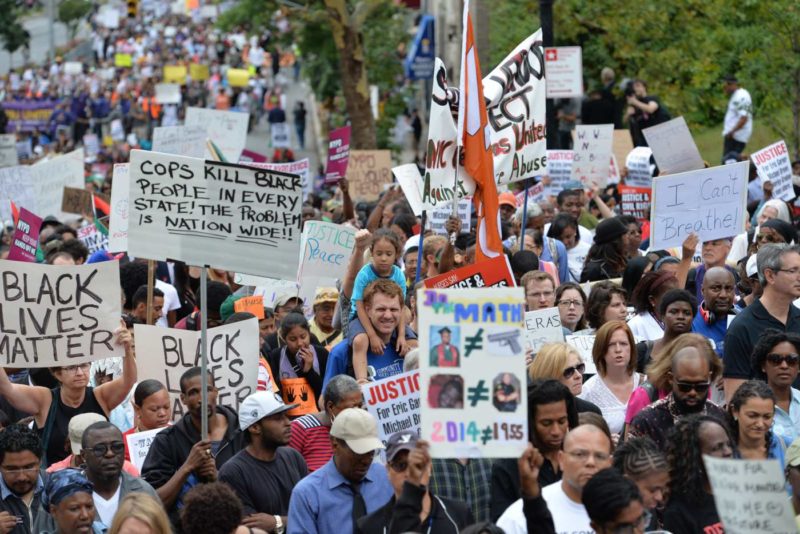
To view the entire series of Rising Up for Justice! posts, insert “rising up” in the search bar above.
Black Lives Matter but slavery isn’t our only narrative
By Aretha Phiri and Michelle M Wright, The Conversation
September 13, 2020
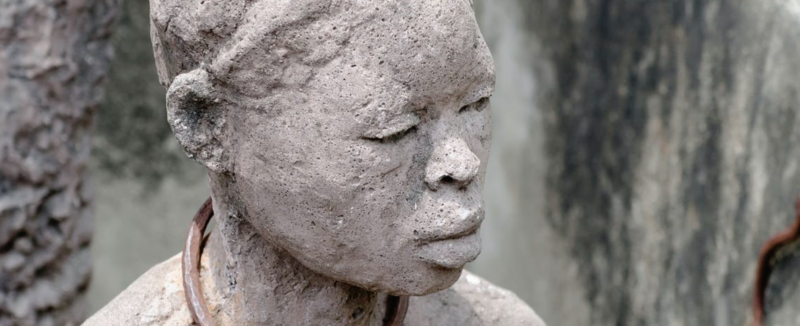
Our historical understanding of Blackness is most commonly shaped by the story of the Atlantic slave trade – the forced movement of Africans to the West, in particular to the Americas. But this is a linear narrative that is dominated by American voices. It’s not just potentially exclusory; it doesn’t adequately take into account the diversity of black people worldwide. The same is true of Blackness studies, which continue to be dominated by and serve the interests of Western scholarship. Aretha Phiri asks Michelle M. Wright, professor and author of Becoming Black: Creating Identity in the African Diaspora, about her work in disrupting the slavery narrative.
Aretha Phiri: To start with a recent development, the Black Lives Matter movement appears to have gained global momentum. And yet its impact seems to be mainly in the global North. Does this suggest that black people’s experience of race and racism is not universal?
Michelle M. Wright: The fight for freedom is important, but it really has to include everybody. This requires some radical rethinking. We have to ask who gets to access contemporary spaces. Who has the time (and money) to join in the fight according to the times and places set by the leaders? Who speaks the language we have chosen to communicate in, and who is left out? Black folks are astonishingly diverse in their cultures, histories, languages, religions, so no single definition of Blackness is going to fit everyone. When we fail to consider this, we effectively leave many Black people out of the conversation.
Aretha Phiri: Slavery’s afterlife is central to Black Lives Matter’s important call for racial and structural justice and equality. Yet, in your paper, Black in Time: Diaspora, Diversity and Identity, you trouble the dominance of a corresponding “Middle Passage” epistemology as racially reductive. What is broadly meant by “Middle Passage” thinking and how is it disseminated by US-based scholars?
Michelle M. Wright: In most US (and European) academic conversations, the “Middle Passage” – also known as the Atlantic slave trade – is used interchangeably with the African “diaspora” – the dispersal of Black and African people from their “original”, typically (West) African locales to North America. This linear mapping is not just convenient, it is false. Ninety-five percent of enslaved Africans were transported to South America and the Caribbean, not the US; not to mention the millions of slaves who were transported east to places like Turkey and India. Reinforced by a linear timeline which is understood to “progressively” track history, this mapping further distorts history in service to the West. That is, because (West) Africa is the starting point, the tendency is to view it as embedded in “the past” and the West as aligned with “the future”.
Read the full article here.
More Breaking News here.
More about Breonna Taylor’s killing here.
Comments Are Welcome
Note: We moderate submissions in order to create a space for meaningful dialogue, a space where museum visitors – adults and youth –– can exchange informed, thoughtful, and relevant comments that add value to our exhibits.
Racial slurs, personal attacks, obscenity, profanity, and SHOUTING do not meet the above standard. Such comments are posted in the exhibit Hateful Speech. Commercial promotions, impersonations, and incoherent comments likewise fail to meet our goals, so will not be posted. Submissions longer than 120 words will be shortened.
See our full Comments Policy here.