Simple Steps to Make Voting Easier
Share
Explore Our Galleries









Breaking News!
Today's news and culture by Black and other reporters in the Black and mainstream media.
Ways to Support ABHM?
By Marianne Dhenin, Yes Magazine
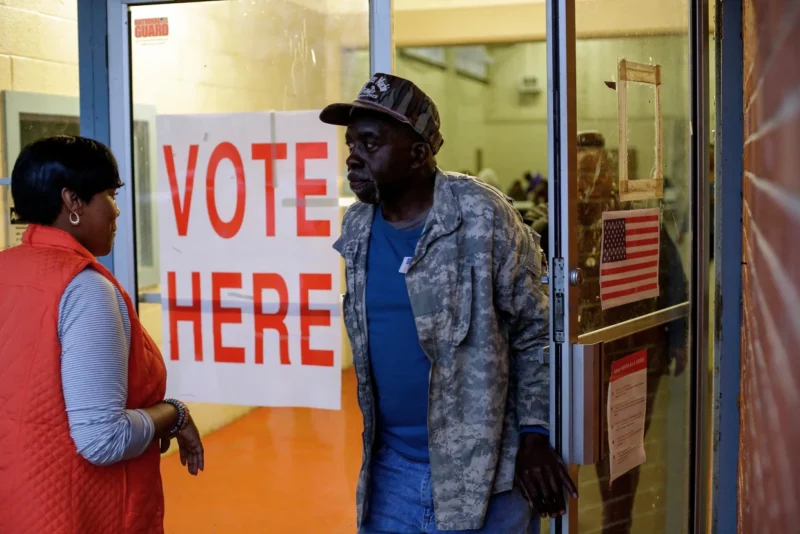
The United States consistently underperforms on a critical measure of the health of its democracy: voter turnout, meaning the percentage of eligible voters who actually cast a vote in elections. Voter turnout in the U.S. is much lower than in other countries, hovering around 60% in presidential elections and falling to just 40% in midterms. When researchers at the Pew Research Center compared turnout among the voting-age population in the 2020 presidential election to recent elections in 49 other nations with highly developed economies and solid democratic traditions, the U.S. came in 31st.
Alongside get-out-the-vote efforts that happen right before elections, long-term policy-oriented campaigns are underway nationwide to boost voter turnout in the U.S., including making Election Day a national holiday to give voters time off to cast their ballots, rolling out automatic and pre-registration options, and expanding vote-at-home options. “Generating higher voter turnout is critical toward building a healthy democracy that works for everyone,” says Andrea Hailey, CEO at Vote.org.
Several factors influence voter turnout in every nation, including voter enthusiasm; candidates and issues; and whether the election is a presidential, midterm, or local election. The U.S. is unique in its complex and patchwork state-led voting system, which creates stumbling blocks for would-be voters at every turn. “One of the largest contributors to low voter turnout in the U.S. [are] the laws that govern voting,” says Gayle Alberda, a professor of politics and public administration at Fairfield University.
Depending on where a voter lives, they must navigate a series of hurdles, including registering to vote, requesting an absentee ballot or locating a polling place, and ensuring they have the documents required to cast a ballot before they even get to the ballot box.
Keep reading to learn how we can combat these hurdles.
Taking some of these steps could encourage the Black voters that candidates hope to reach.
Comments Are Welcome
Note: We moderate submissions in order to create a space for meaningful dialogue, a space where museum visitors – adults and youth –– can exchange informed, thoughtful, and relevant comments that add value to our exhibits.
Racial slurs, personal attacks, obscenity, profanity, and SHOUTING do not meet the above standard. Such comments are posted in the exhibit Hateful Speech. Commercial promotions, impersonations, and incoherent comments likewise fail to meet our goals, so will not be posted. Submissions longer than 120 words will be shortened.
See our full Comments Policy here.