She helps Black people in Mississippi get abortions. The U.S. Supreme Court ruling won’t stop her
Share
Explore Our Galleries









Breaking News!
Today's news and culture by Black and other reporters in the Black and mainstream media.
Ways to Support ABHM?
By CBC Radio
‘I’m going to defy this ruling, defy this law, with everything in my being,’ says Michelle Colón
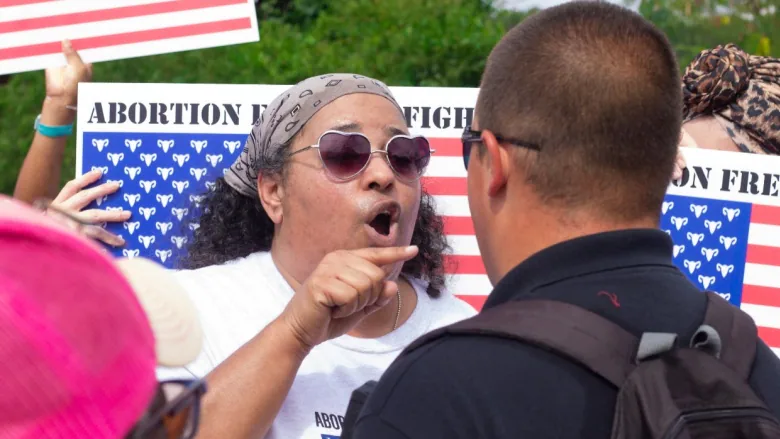
A woman who runs a reproductive rights organization in Mississippi says she will keep helping people access abortion services, in defiance of the U.S. Supreme Court overturning of Roe. v. Wade.
On Friday, the top U.S. court upheld Mississippi’s 15-week abortion ban, and in doing so, overturned the landmark 1973 decision that enshrined abortion as a constitutional right.
The ruling will have an immediate effect on abortion access in the U.S., where at least 13 states have anti-abortion trigger laws designed to kick in with the fall of Roe.
Mississippi has a trigger law that bans all abortions except in cases where there is a criminal charge of rape, or to protect the life of the pregnant person. It will come into effect when the state’s attorney general certifies it, likely within days of Friday’s ruling.
Under the trigger law, “any person, except the pregnant woman, who purposefully, knowingly or recklessly performs or attempts to perform or induce an abortion” could face between one and 10 years in jail.
Michelle Colón is the executive director of Sisters Helping Every Woman Rise and Organize (SHERo), an organization that advocates for reproductive rights and helps connect Black and brown people to abortion services. Here is part of her conversation with As It Happens guest host Tom Harrington.
Listen to the interview to hear about Colón’s activism in her own voice.
Repealing Roe vs Wade makes abortion illegal in many states, adding another barrier for Black women who seek the healthcare procedure.
We post about other issues impacting the Black community here.
Comments Are Welcome
Note: We moderate submissions in order to create a space for meaningful dialogue, a space where museum visitors – adults and youth –– can exchange informed, thoughtful, and relevant comments that add value to our exhibits.
Racial slurs, personal attacks, obscenity, profanity, and SHOUTING do not meet the above standard. Such comments are posted in the exhibit Hateful Speech. Commercial promotions, impersonations, and incoherent comments likewise fail to meet our goals, so will not be posted. Submissions longer than 120 words will be shortened.
See our full Comments Policy here.