Rhode Island Church Taking Unusual Step to Illuminate Its Slavery Role
Share
Explore Our Galleries









Breaking News!
Today's news and culture by Black and other reporters in the Black and mainstream media.
Ways to Support ABHM?
By Katharine Q. Seelye, the New York Times
One of the darkest chapters of Rhode Island history involved the state’s pre-eminence in the slave trade, beginning in the 1700s. More than half of the slaving voyages from the United States left from ports in Providence, Newport and Bristol — so many, and so contrary to the popular image of slavery as primarily a scourge of the South, that Rhode Island has been called “the Deep North.”
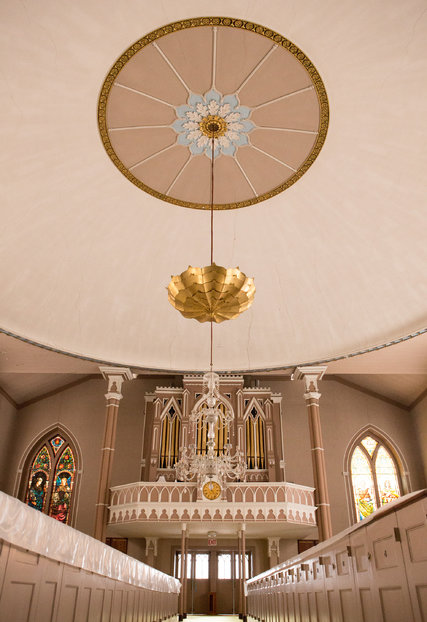
That history will soon become more prominent as the Episcopal diocese here, which was steeped in the trans-Atlantic slave trade, establishes a museum dedicated to telling that story, the first in the country to do so, according to scholars…
Over the last decade, the Episcopal Church of the United States has formally acknowledged and apologized for its complicity in perpetuating slavery. Some Episcopal dioceses have been re-examining their role, holding services of repentance and starting programs of truth and reconciliation.
The Diocese of Rhode Island, like many others, has been slow to respond. But under Bishop W. Nicholas Knisely, who became the Episcopal bishop of Rhode Island in 2012, it is taking steps to publicly acknowledge its past. They include the establishment of a museum focused on the trans-Atlantic slave trade, slavery and the North’s complicity, as part of a new center for racial reconciliation and healing.
“I want to tell the story,” Bishop Knisely said, “of how the Episcopal Church and religious voices participated in supporting the institution of slavery and how they worked to abolish it. It’s a mixed bag.”…
Diocesan officials have already begun conversations with the public, including African-American church leaders, about the goals of the reconciliation center. While the cathedral is being renovated, planners have worked with local universities and organizations to sponsor speakers and programs that delve into racial issues. They have scheduled more forums for the fall at Episcopal churches throughout the state where slave traders once worshiped.
The museum, scheduled to open in 2017, will aim to illuminate the church’s role in the trade and the extensive but often-ignored history of slavery in New England.
[…]
Tiny Rhode Island played an outsize role in the trade, thanks to the state’s financiers, a seafaring work force and officials who turned a blind eye to antislavery laws…
In establishing the museum and reconciliation center, the church is working with the Center for the Study of Slavery and Justice at Brown and with descendants of the DeWolfs, a prominent Episcopalian family based in Bristol and the most prolific slave-trading family in the United States…
Read the full article here.
Read more Breaking News here.
Comments Are Welcome
Note: We moderate submissions in order to create a space for meaningful dialogue, a space where museum visitors – adults and youth –– can exchange informed, thoughtful, and relevant comments that add value to our exhibits.
Racial slurs, personal attacks, obscenity, profanity, and SHOUTING do not meet the above standard. Such comments are posted in the exhibit Hateful Speech. Commercial promotions, impersonations, and incoherent comments likewise fail to meet our goals, so will not be posted. Submissions longer than 120 words will be shortened.
See our full Comments Policy here.