Racism Is Not A Mental Illness
Share
Explore Our Galleries









Breaking News!
Today's news and culture by Black and other reporters in the Black and mainstream media.
Ways to Support ABHM?
By Julia Craven, the Huffington Post
An act of terrorism unfolded on American soil last night when Dylann Roof allegedly killed nine people at Emanuel African Methodist Episcopal Church, a historic black church in Charleston, South Carolina.
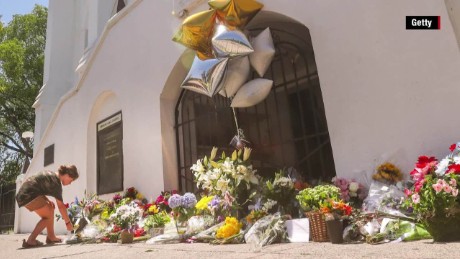
The victims were attending a Wednesday night Bible study. Roof reportedly sat in on this service for about an hour before going on a shooting rampage. His intention was “to shoot black people” — a plot that had been in the works for at least six months. Sylvia Johnson, a relative of one of the victims, said Roof told his targets, “You rape our women and you’re taking over our country. And you have to go.”
Yet mainstream media has already begun wondering what really might have motivated him to kill — as we often do with white murderers. Fox News analysts ignored the racist flags on Roof’s clothing and suggested the attack was religiously motivated, while The Daily Beast made sure to let America know Roof was “quiet” and “softspoken.” Other outlets cited his use of a medication that assists with addiction recovery.
And, of course, some have already questioned whether Roof was mentally ill[.]
This narrative — which is not afforded to people of color — feeds into the assumption that incidents like what happened at Emanuel AME Church are isolated tragedies executed by lone gunmen. Essentially, it excuses the system that allows racialized terrorism to keep happening.
Only around 22 percent of mass murderers suffer from clinical mental illnesses, while the rest are just people with narcissistic and paranoid personality traits like entitlement, self-righteousness and resentment. They strike back at people they both know and don’t know. At the time of the killings, they’re usually feeling a combination of murderous rage, utter hopelessness and suicidal despair — but these things are not mental illness, Stone wrote in the journal Violence and Gender this past May.
What we know of Roof so far echoes these facts, Stone told HuffPost. Men like this, said Stone, are susceptible to white supremacist ideology because it has the ability to “[reverse] a feeling of worthlessness and inadequacy.” Historically, white supremacy has been attractive to disenfranchised white men, explained Stone, because it gives their suffering meaning and it gives them a cause to rally around.
[…]

Racism is not a mental illness. Unlike actual mental illnesses, it is taught and instilled. Mental illness was not the state policy of South Carolina, or any state for that matter, for hundreds of years — racism was. Assuming actions grounded in racial biases are irrational not only neutralizes their impact, it also paints the perpetrator as a victim.
[…]
Racism isn’t a mental illness, but the psychological, emotional and physical effects on those who experience it are very real. And I’m exhausted.
Read the full article here.
Read more Breaking News here.
Comments Are Welcome
Note: We moderate submissions in order to create a space for meaningful dialogue, a space where museum visitors – adults and youth –– can exchange informed, thoughtful, and relevant comments that add value to our exhibits.
Racial slurs, personal attacks, obscenity, profanity, and SHOUTING do not meet the above standard. Such comments are posted in the exhibit Hateful Speech. Commercial promotions, impersonations, and incoherent comments likewise fail to meet our goals, so will not be posted. Submissions longer than 120 words will be shortened.
See our full Comments Policy here.