Queen Elizabeth’s death revives criticism of Britain’s legacy of colonialism
Share
Explore Our Galleries









Breaking News!
Today's news and culture by Black and other reporters in the Black and mainstream media.
Ways to Support ABHM?
By Janelle Griffith, NBC News
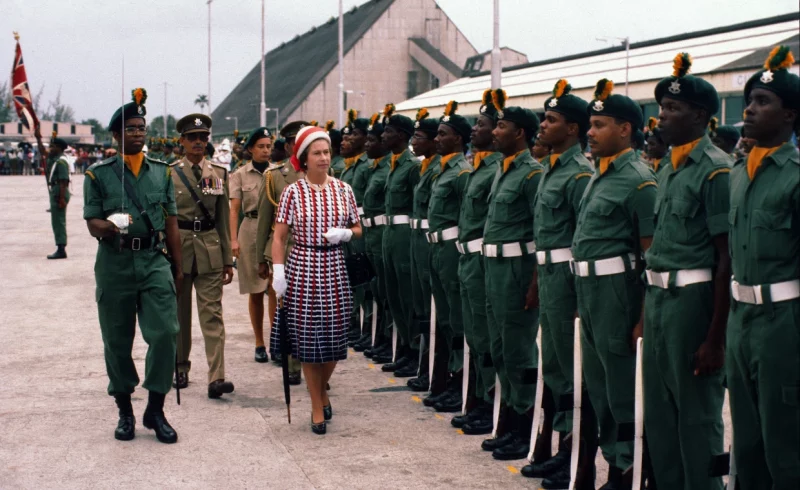
As the death Thursday of Queen Elizabeth II prompted an outpouring of grief from millions across the world, it also revived criticism of her legacy, highlighting the complicated feelings of those who saw her as a symbol of the British colonial empire — an institution that enriched itself through violence, theft and oppression.
“If anyone expects me to express anything but disdain for the monarch who supervised a government that sponsored the genocide that massacred and displaced half my family and the consequences of which those alive today are still trying to overcome, you can keep wishing upon a star,” Uju Anya, an associate professor of second language acquisition at Carnegie Mellon University, tweeted Thursday afternoon.
Her tweet had been retweeted more than 10,000 times and had garnered nearly 38,000 likes by Thursday evening.
In an interview Thursday, Anya, 46, said that she is “a child of colonization” — her mother was born in Trinidad and her father in Nigeria. They met in England in the 1950s as colonial subjects who were sent there for university. They married there and moved to Nigeria together.
[…]
While Elizabeth ruled as Britain navigated a post-colonial era, she still bore a connection to its colonial past, which was rooted in racism and violence against Asian and African colonies. There have been growing calls in recent years for the monarchy to confront its colonial past.
Zoé Samudzi, a Zimbabwean American writer and an assistant professor of photography at the Rhode Island School of Design, wrote on Twitter: “As the first generation of my family not born in a British colony, I would dance on the graves of every member of the royal family if given the opportunity, especially hers.” She did not immediately respond to a request for comment.
Learn more about the complex feelings about Queen Elizabeth II’s death.
Africans were kidnapped into slavery and colonizers fought over the new lands and inhabitants, even forcing Haitians to pay reparations.
Stay up to date with the latest Black news.
Comments Are Welcome
Note: We moderate submissions in order to create a space for meaningful dialogue, a space where museum visitors – adults and youth –– can exchange informed, thoughtful, and relevant comments that add value to our exhibits.
Racial slurs, personal attacks, obscenity, profanity, and SHOUTING do not meet the above standard. Such comments are posted in the exhibit Hateful Speech. Commercial promotions, impersonations, and incoherent comments likewise fail to meet our goals, so will not be posted. Submissions longer than 120 words will be shortened.
See our full Comments Policy here.