Philadelphia man completes over 400-mile walk along the Underground Railroad in honor of Harriet Tubman
Share
Explore Our Galleries









Breaking News!
Today's news and culture by Black and other reporters in the Black and mainstream media.
Ways to Support ABHM?
By Claretta Bellamy, NBC News
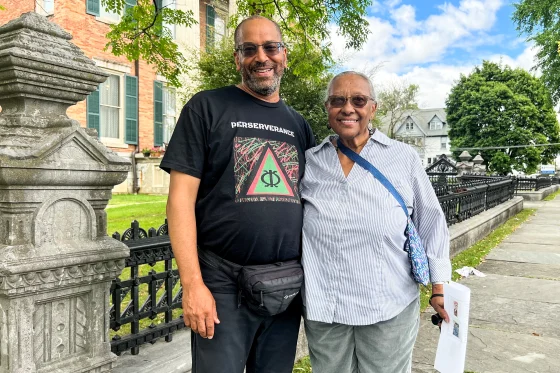
Kenneth Johnston of West Philadelphia always had a deep appreciation for Harriet Tubman and her work of freeing enslaved Black people. But instead of reading a book or watching a documentary to remember Tubman’s trek to freedom, Johnston put his shoes on and followed the same path she walked in her honor.
On Saturday, Johnston, 61, completed his over 400-mile trek, which he called a Walk to Freedom. His journey led him across New York state and along the routes of the Underground Railroad, stopping by historic Black sites and communities along the path.
Beginning in July, Johnston’s first stop was the Harriet Tubman Memorial in Harlem, New York. He continued on through the Hudson River Valley, across central New York, and ended his walks at the British Methodist Episcopal Church — the same church Tubman attended in Ontario, Canada.
“I was amazed,” Johnston said of his experience. “It was an incredible journey walking across New York state, particularly from Albany to Buffalo … visiting many of the known Underground Railroad communities.”
Johnston performed similar walks in the past.
Although Harriet Tubman is well known for her role in the Underground Railroad, we’re still discovering things about her life.
Get more Black history news.
Comments Are Welcome
Note: We moderate submissions in order to create a space for meaningful dialogue, a space where museum visitors – adults and youth –– can exchange informed, thoughtful, and relevant comments that add value to our exhibits.
Racial slurs, personal attacks, obscenity, profanity, and SHOUTING do not meet the above standard. Such comments are posted in the exhibit Hateful Speech. Commercial promotions, impersonations, and incoherent comments likewise fail to meet our goals, so will not be posted. Submissions longer than 120 words will be shortened.
See our full Comments Policy here.