One year later, California’s system to find missing Black people is working through its challenges
Share
Explore Our Galleries









Breaking News!
Today's news and culture by Black and other reporters in the Black and mainstream media.
Ways to Support ABHM?
By Marquise Francis, NBC
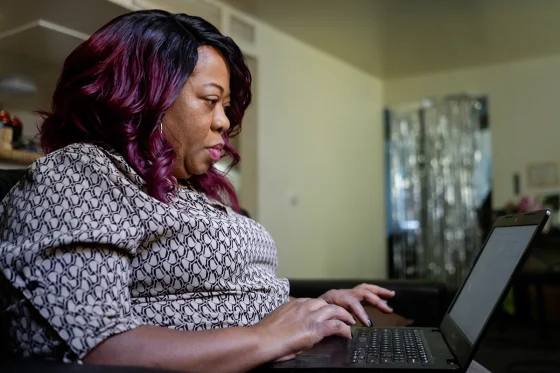
LOS ANGELES — La’Tannya Banks is still reeling from the near two-day disappearance of her 15-year-old daughter Lelah, who seemingly vanished from their Los Angeles apartment one morning in July.
“I thought she’d been abducted,” said Banks. “I immediately started freaking out.”
Banks said she worked around the clock for 37 hours to find her only child. She called every hospital in the area to see if Lelah had been admitted. She brought Lelah’s photo to every nearby hotel she could find and posted her daughter’s photos online, pleading for help from friends, family and youth advocates.
But when she went to the Los Angeles Police Department for help, Banks said they responded with little urgency and told her that Lelah’s disappearance did not meet the requirements for an Amber Alert. She said it took more than 24 hours after she first contacted them to even allow her to file a police report.
“I told them that the 48 hours are critical for missing people,” said Banks, who previously worked with a medical examiner’s office. Banks said she was hardly given updates and her dozens of calls and emails to officers were passed along from officer to officer.
But, Banks said, “I just kept putting pressure on them.” With the help of an advocate, Banks asked authorities to issue an Ebony Alert, California’s new notification system to inform the public about missing Black youths.
[…]
The alert was put in place to address the disproportionately high number of Black children who go missing or are abducted in California. A year after the system was approved by lawmakers statewide, the Ebony Alert has been deployed 31 times, recovering 27 people, according to the California Highway Patrol, which ultimately issues the alerts. While missing persons advocates like Jasmine Lee, CEO of the Dock Ellis Foundation, say it is a powerful tool, she also is concerned that it’s not deployed nearly enough, and that local law enforcement officers lack proper training to use it.
Learn about a new show that highlights the experience of missing people.
Comments Are Welcome
Note: We moderate submissions in order to create a space for meaningful dialogue, a space where museum visitors – adults and youth –– can exchange informed, thoughtful, and relevant comments that add value to our exhibits.
Racial slurs, personal attacks, obscenity, profanity, and SHOUTING do not meet the above standard. Such comments are posted in the exhibit Hateful Speech. Commercial promotions, impersonations, and incoherent comments likewise fail to meet our goals, so will not be posted. Submissions longer than 120 words will be shortened.
See our full Comments Policy here.