On This Day in History, White Mob Wages Violence Against Black Voters
Share
Explore Our Galleries









Breaking News!
Today's news and culture by Black and other reporters in the Black and mainstream media.
Ways to Support ABHM?
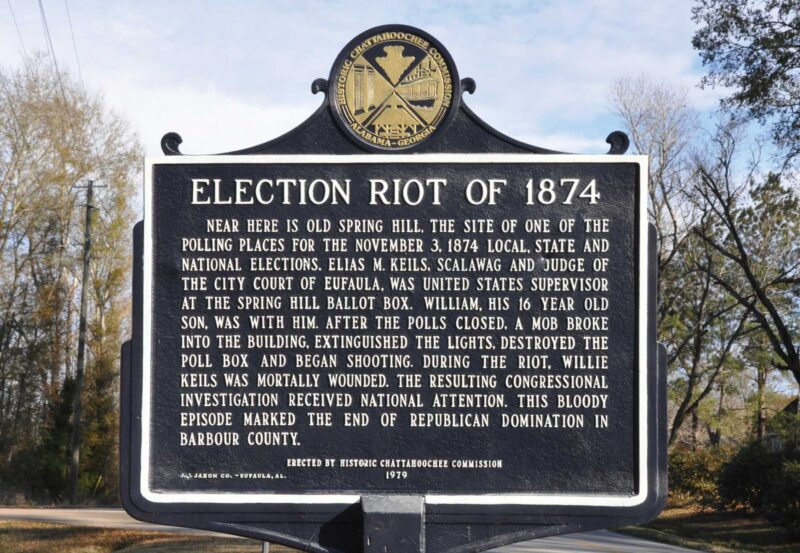
According to the Equal Justice Initiative,
On Election Day, November 3, 1874, local white residents in Eufaula, Alabama, determined to regain political dominance in the county that they had lost during Reconstruction, used terror and intimidation to suppress Black votes, ultimately waging a violent, deadly massacre.
As the 1874 election neared, white employers openly fired any Black workers who intended to vote for Elias Keils, a white candidate who supported the aims of Reconstruction, for the position of city court judge. False rumors spread that Black residents planned to violently drive white voters from the polls, and white residents began stockpiling guns near Eufaula polling sites.
Judge Keils tried to notify state and federal officials of the danger, but Alabama’s attorney general rebuffed the warning, and federal troops stationed in Eufaula refused to intervene.
Head over to EJI to discover how the violence unfolded.
Violence like this was common during Reconstruction.
Comments Are Welcome
Note: We moderate submissions in order to create a space for meaningful dialogue, a space where museum visitors – adults and youth –– can exchange informed, thoughtful, and relevant comments that add value to our exhibits.
Racial slurs, personal attacks, obscenity, profanity, and SHOUTING do not meet the above standard. Such comments are posted in the exhibit Hateful Speech. Commercial promotions, impersonations, and incoherent comments likewise fail to meet our goals, so will not be posted. Submissions longer than 120 words will be shortened.
See our full Comments Policy here.