On the Long Tradition of the Imitative Performance of Blackness

Share

Explore Our Galleries

An NAACP flyer campaigning for the Dyer Anti-Lynching Bill, which passed the U.S. House of Representatives in 1922, but was filibustered to defeat in the Senate. Dyer, the NAACP, and freedom fighters around the country, like Flossie Baily, struggled for years to get the Dyer and other anti-lynching bills passed, to no avail. Today there is still no U.S. law specifically against lynching. In 2005, eighty of the 100 U.S. Senators voted for a resolution to apologize to victims' families and the country for their failure to outlaw lynching. Courtesy of the National Association for the Advancement of Colored People (NAACP).
Some Exhibits to Come – One Hundred Years of Jim Crow
Mammy Statue JC Museum Ferris
Bibliography – One Hundred Years Of Jim Crow
Claude, age 23, just months before his 1930 murder. Courtesy of Faith Deeter.
Freedom’s Heroes During Jim Crow: Flossie Bailey and the Deeters
Souvenir Portrait of the Lynching of Abram Smith and Thomas Shipp, August 7, 1930, by studio photographer Lawrence Beitler. Courtesy of the Indiana Hisorical Society.
An Iconic Lynching in the North
Lynching Quilt
Claxton Dekle – Prosperous Farmer, Husband & Father of Two
Ancient manuscripts about mathematics and astronomy from Timbuktu, Mali
Some Exhibits to Come – African Peoples Before Captivity
Shackles for Adults & Children from the Henrietta Marie
Some Exhibits to Come – The Middle Passage
Slaveship Stowage Plan
What I Saw Aboard a Slave Ship in 1829
Arno Michaels
Life After Hate: A Former White Power Leader Redeems Himself

Breaking News!

Today's news and culture by Black and other reporters in the Black and mainstream media.

Ways to Support ABHM?

Ayanna Thompson Considers the History of Minstrelsy, Racial Tropes, and the White Gaze
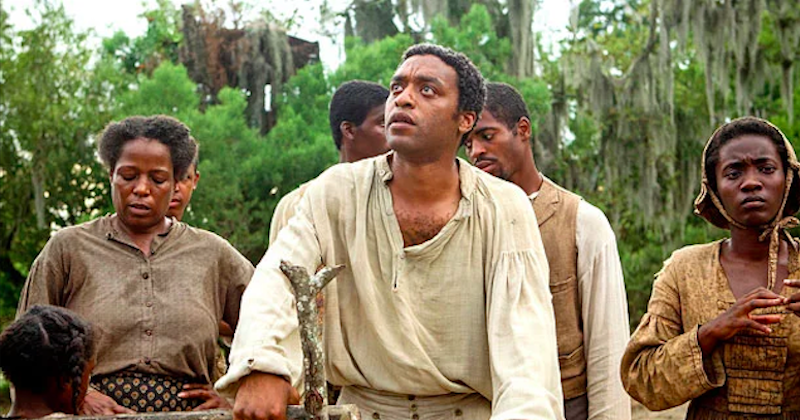
By Ayanna Thompson, Lithub

In Shakespeare’s lifetime, blackness was performed in two modes—exhibition (black people on display) and imitation (white men in racial prosthetics). Because in the exhibition mode all the power resided in the viewer (not the one exhibited), and because in the imitation mode all the power resided in the white, blacked-up performer, performances of blackness were a white performance property for actors and audiences.

In the 19th century, blackness and whiteness were performed by black actors for the first time in the United States and the United Kingdom, and their performances challenged the long-standing assumptions that (1) blackness was a white performance property and (2) only white actors could be virtuoso performers. These early 19th-century black performers were denigrated by white critics, white audiences, and their fellow white actors for “aping” white performance modes. The criticisms these black actors faced told them to stay in their lane, a lane which indicated they were only fit for imitation and “aping.”

In the 21st century, it is possible to see the legacy of these unequal horizons of expectations for black performers in three distinct performance modes: minstrelsy/imitation, exhibition/trauma, and anxiety/authenticity…

Tyler Perry began writing plays in the 1990s that were focused on the struggles of working-class black Americans. They often had a melodramatic structure with explicitly redemptive Christian endings. Writing in the New York Times Magazine, Wesley Morris described Perry’s plays as “loud, long, hysterical shows in which a bunch of characters, not infrequently on a set resembling a sitcom diorama, love and leave one another, imparting morals the way a shot gets put. They aren’t quite farces, dramas or melodramas. They’re not exactly parables, musicals or church, either. They’re usually all of those things. Somebody’s mad, somebody’s cheating, somebody’s dying, somebody’s scheming. Here’s some dirt. Here’s some slapstick. Here’s a gospel song. Here’s the truth. Oh, Lord…”

Read the full article here

Learn more about Blackface here and here

More Breaking News here.

Comments Are Welcome

Note: We moderate submissions in order to create a space for meaningful dialogue, a space where museum visitors – adults and youth –– can exchange informed, thoughtful, and relevant comments that add value to our exhibits.

Racial slurs, personal attacks, obscenity, profanity, and SHOUTING do not meet the above standard. Such comments are posted in the exhibit Hateful Speech. Commercial promotions, impersonations, and incoherent comments likewise fail to meet our goals, so will not be posted. Submissions longer than 120 words will be shortened.

See our full Comments Policy here.

Leave a Comment







