New Tools Empower Black Communities On the Frontlines of Climate Change
Share
Explore Our Galleries









Breaking News!
Today's news and culture by Black and other reporters in the Black and mainstream media.
Ways to Support ABHM?
By Willy Blackmore, Word in Black
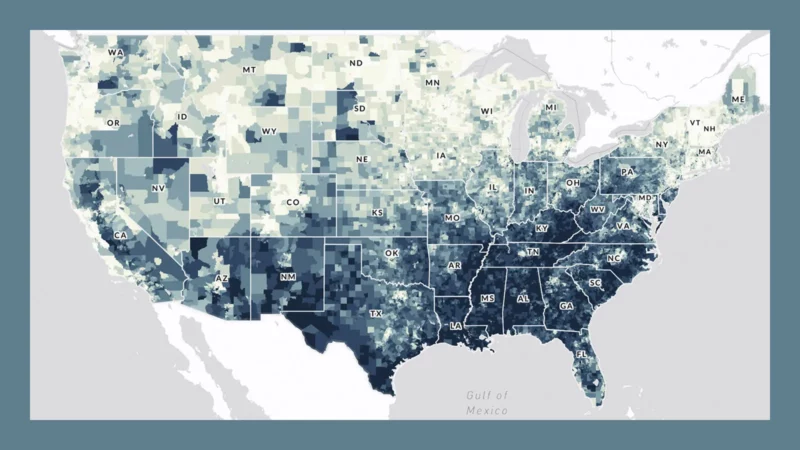
It’s no exaggeration to say that nearly all of LaPlace, Louisiana flooded when Hurricane Ida hit the small town just upriver from New Orleans as a category 4 storm two years ago. Almost 60 percent of the 7,000 homes in the greater Saint John the Baptist Parish that are covered by the National Flood Insurance Program had to file a claim after the storm, which also left millions in southeastern Louisiana without power for upward of two weeks. It’s the kind of disaster that’s expected to happen again and again there in the future, according to an exhaustive new report from the Environmental Defense Fund and Texas A&M University.
Saint John the Baptist Parish faces the greatest climate-change risk of any county in the entire country. The parish also happens to be nearly 60% Black.
The Climate Vulnerability Index, as the new report and mapping tool is called, shows just how disproportionally at-risk such communities are to climate change. In the 10 most-threatened communities, the population is about one-third Black, although Blacks make up only 13.6% of the nation’s population. Half of those communities are in Louisiana, with locales in Texas, South Carolina, and Kentucky rounding out the list. It’s just the latest stark reminder that the history of racism in the United States has concentrated Black people in places that will be hit early and hard by the climate crisis.
Sitting on a wedge of low-lying land between Lake Pontchartrain and the Mississippi River, floods in LaPlace tend to come from the lake side. During hurricanes and other severe weather patterns, storm-surge buildup on Lake Pontchartrain and high winds push water over the western bank and into the town.
After decades of delays, construction has begun on a levee that will protect the backside of the town, slated to be completed next year. But mitigating flood risk is only one piece of the overall puzzle in a community like St. John the Baptist Parish.
The residents of Jackson recently dealt with some of these consequences.
More breaking news here.
Comments Are Welcome
Note: We moderate submissions in order to create a space for meaningful dialogue, a space where museum visitors – adults and youth –– can exchange informed, thoughtful, and relevant comments that add value to our exhibits.
Racial slurs, personal attacks, obscenity, profanity, and SHOUTING do not meet the above standard. Such comments are posted in the exhibit Hateful Speech. Commercial promotions, impersonations, and incoherent comments likewise fail to meet our goals, so will not be posted. Submissions longer than 120 words will be shortened.
See our full Comments Policy here.