National Archives Aids in Tulsa Riot Mass Burial Identification
Share
Explore Our Galleries









Breaking News!
Today's news and culture by Black and other reporters in the Black and mainstream media.
Ways to Support ABHM?
By Cara Moore Lebonick, National Archives News
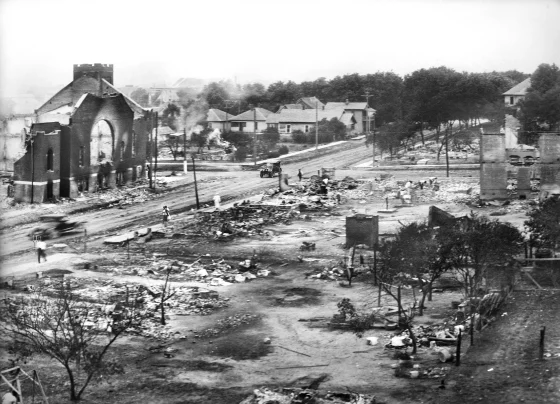
ST. LOUIS, November 4, 2024 — On the 100-year anniversary of race riots erupting in the predominantly Black-populated and affluent Greenwood District in the city of Tulsa, OK, the city launched an investigation into unmarked graves in likely mass burial sites resulting from the riots.
[…]
The laboratory assisting Tulsa, Intermountain Forensics, turned to the National Archives for records to help identify individuals from those graves. Based on those records, the first positive identification was made earlier this summer: a World War I veteran named C. L. Daniel.
The 1921 event has been called both the Tulsa Race Riot and Tulsa Race Massacre, and it resulted in a massive loss to Black lives and properties. Investigations into the excavated burial sites sought to identify the remains using a combination of forensic genealogy and community statements and family histories about family members interred after the riots.
This extensive research led to many possible identifications, but in July it yielded its first result. Intermountain Forensics came across possible veteran matches for the burials and consulted the National Archives to confirm the identity.
“The Intermountain Forensics 1921 Tulsa Identification Project forensic investigative genetic genealogy group submitted several requests related to burials,” said Anna Kampwerth, a supervisory archives specialist at the National Personnel Records Center (NPRC). “The requests were for World War I–era veterans, an era heavily affected by the 1973 fire and which requires the most additional reference research for our team.”
Kampwerth and their colleagues used identifying information from the request to confirm relevant holdings at the National Archives at St. Louis, which shares office space with the NPRC.
“We are able to expediently provide many archival auxiliary records . . . like the Deceased Veteran’s Claim File used for the Tulsa burial identification, to facilitate NPRC’s responses to benefits cases,” said Theresa Fitzgerald, Director of the Personnel Records Division of the National Archives at St. Louis. “We look forward to further working with members of the media and other stakeholders as these identifications continue.”
Finish reading the article here.
More on the Tulsa riots and the ongoing grave identification.
Comments Are Welcome
Note: We moderate submissions in order to create a space for meaningful dialogue, a space where museum visitors – adults and youth –– can exchange informed, thoughtful, and relevant comments that add value to our exhibits.
Racial slurs, personal attacks, obscenity, profanity, and SHOUTING do not meet the above standard. Such comments are posted in the exhibit Hateful Speech. Commercial promotions, impersonations, and incoherent comments likewise fail to meet our goals, so will not be posted. Submissions longer than 120 words will be shortened.
See our full Comments Policy here.