Most Black Americans Remain Left Behind by Economic Progress 54 Years after Dr. King’s Assassination
Share
Explore Our Galleries









Breaking News!
Today's news and culture by Black and other reporters in the Black and mainstream media.
Ways to Support ABHM?
By Sharon Austin, Professor of Political Science, University of Florida
On April 4, 1968, Dr. Martin Luther King Jr. was assassinated in Memphis, Tennessee, while assisting striking sanitation workers.
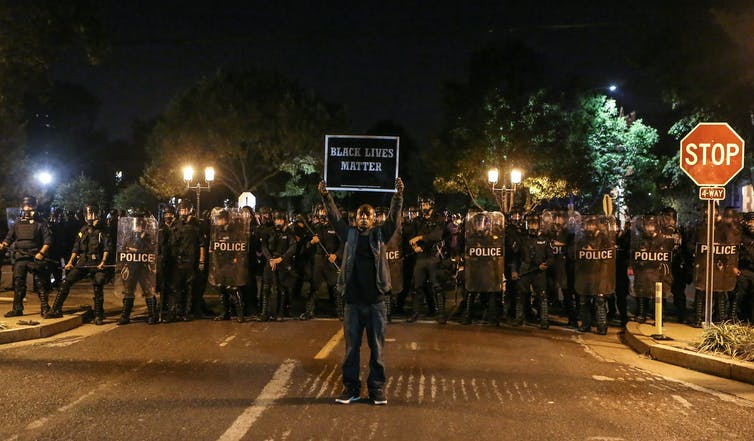
Back then, over a half century ago, the wholesale racial integration required by the 1964 Civil Rights Act was just beginning to chip away at discrimination in education, jobs and public facilities. Black voters had only obtained legal protections two years earlier, and the 1968 Fair Housing Act was about to become law.
African-Americans were only beginning to move into neighborhoods, colleges and careers once reserved for Whites only…
The 1960s were tumultuous years indeed. During the long, hot summers from 1965 to 1968, American cities saw approximately 150 race riots and other uprisings. The protests were a sign of profound citizen anger about a nation that was, according to the National Advisory Commission on Civil Disorders, “moving toward two societies, one black, one White — separate and unequal.”
[…]
A year before his death, Dr. King and others began organizing a Poor People’s Campaign to “dramatize the plight of America’s poor of all races and make very clear that they are sick and tired of waiting for a better life.”
On May 28, 1968, one month after King’s assassination, the mass anti-poverty march took place. Individuals from across the nation erected a tent city on the National Mall, in Washington, calling it Resurrection City. The aim was to bring attention to the problems associated with poverty.
Ralph Abernathy, an African-American minister, led the way in his fallen friend’s place…
So, how far have Black people progressed since 1968? Have we gotten our fair share yet? Those questions have been on my mind a lot this month…
Today’s Black poverty rate of 21% is almost three times that of Whites. Compared to the 1968 rate of 32%, there’s not been a huge improvement.
Keep reading about civil rights since the death of Dr. King.
Learn more about the social movements in the 1960s. Civil rights activists are compelled to tell their stories while they still can.
There are more stories about activism and civil rights in our breaking news section.
Comments Are Welcome
Note: We moderate submissions in order to create a space for meaningful dialogue, a space where museum visitors – adults and youth –– can exchange informed, thoughtful, and relevant comments that add value to our exhibits.
Racial slurs, personal attacks, obscenity, profanity, and SHOUTING do not meet the above standard. Such comments are posted in the exhibit Hateful Speech. Commercial promotions, impersonations, and incoherent comments likewise fail to meet our goals, so will not be posted. Submissions longer than 120 words will be shortened.
See our full Comments Policy here.