Michael Regan Rebuilt the EPA, but Did It Deliver for Black Communities?
Share
Explore Our Galleries









Breaking News!
Today's news and culture by Black and other reporters in the Black and mainstream media.
Ways to Support ABHM?
By Adam Mahoney, Capital B
When the Environmental Protection Agency dropped a civil rights investigation last year and subsequently weakened the civil rights complaint process, it dealt a blow to the legacy of the first Black man to lead the agency.
This decision underscored the immense challenges the agency’s former head, Michael Regan, faced during his tenure, where the weight of expectations often collided with and buckled under the harsh realities of the job that required him to work with officials who did not take climate and environmental issues seriously. He elevated the issues facing Black communities across the South more often and more directly than anyone in the top spot before. But that also meant his agency faced more concerted attacks than ever seen before from Congress and state legislators.
“It’s not like he shot himself in the foot,” explained Belinda Joyner, an environmental activist in North Carolina, last year. “He tries to do what should be done, but it’s like he has never fully been established to do it.”
After nearly four years running the agency and just weeks after stepping down ahead of President-elect Donald Trump’s transition, it’s clear that Regan’s reign wrestled with questions that have long kept Black leaders up at night – how to balance being a leader for all when it’s obvious that a select few remain with the proverbial short end of the stick.
As a result, many Black communities across the South could face the same life-threatening environmental problems that existed before his term, like poor access to clean drinking water, extreme flooding, and choking air pollution. Under Trump it’s only expected to get worse, as he has vowed to weaken the nation’s pollution standards. His EPA pick, Lee Zeldin, is a former congressman from New York who routinely voted against climate legislation.
The EPA is the federal agency responsible for protecting human health and the environment by enforcing laws like the Clean Air Act and Clean Water Act, setting pollution standards, and overseeing environmental research and cleanup efforts. Before taking office, the prior administration under Trump defanged the agency, reducing its staff to record lows and reversing much of its power to clean America’s air, water, and land. But arguably, the most daunting challenge for Regan had little to do with rebuilding the agency. Instead, it focused on breaking new ground: genuinely connecting with the people who looked like him and grew up in communities like his in Goldsboro, North Carolina, overwhelmed by landfills, pollution, and flooding.
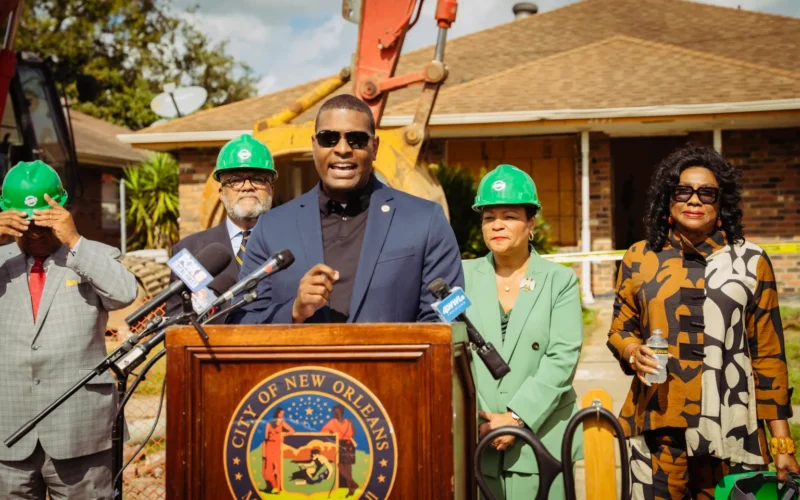
He attempted to do this early, embarking on what he called a “Journey to Justice” tour of Black communities across Texas, Louisiana, and Mississippi, just months after taking office. Black people, by far, are exposed to the most collective environmental issues in America, and as Regan put it in 2021 during the tour, “It’s not lost on me that these people look like me and I look like them.”
Continue reading about how the results were varied.
From PFAS to lead pipes, policies play a role in Black health.
Comments Are Welcome
Note: We moderate submissions in order to create a space for meaningful dialogue, a space where museum visitors – adults and youth –– can exchange informed, thoughtful, and relevant comments that add value to our exhibits.
Racial slurs, personal attacks, obscenity, profanity, and SHOUTING do not meet the above standard. Such comments are posted in the exhibit Hateful Speech. Commercial promotions, impersonations, and incoherent comments likewise fail to meet our goals, so will not be posted. Submissions longer than 120 words will be shortened.
See our full Comments Policy here.