Melvin Van Peebles, Champion of New Black Cinema, Dies at 89
Share
Explore Our Galleries









Breaking News!
Today's news and culture by Black and other reporters in the Black and mainstream media.
Ways to Support ABHM?
By Douglas Martin, The New York Times
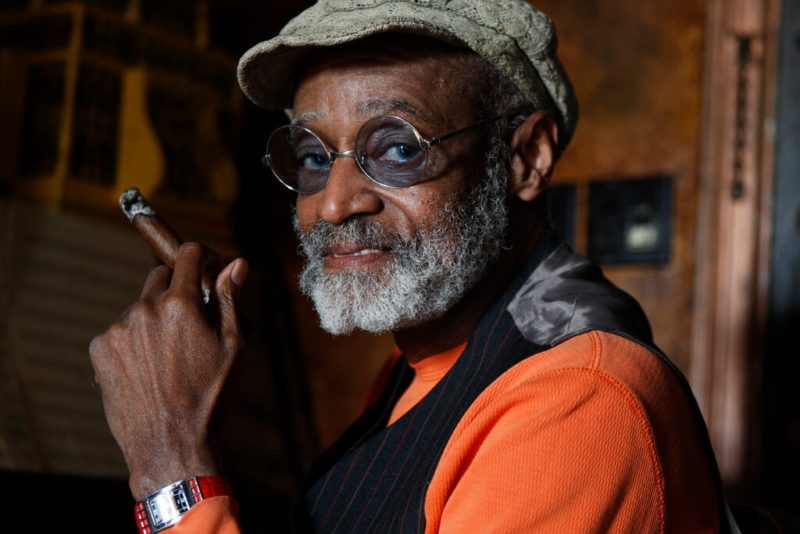
Melvin Van Peebles, the filmmaker praised as the godfather of modern Black cinema and a trailblazer in American independent movies, died on Tuesday at his home in Manhattan. He was 89.
[…]
A Renaissance man whose work spanned books, theater and music, Mr. Van Peebles is best known for his third feature film, “Sweet Sweetback’s Baadasssss Song,” which drew mixed reviews when it was released in 1971, ignited intense debate and became a national hit. The hero, Sweetback, starred in a sex show at a brothel, and the movie sizzled with explosive violence, explicit sex and righteous antagonism toward the white power structure. It was dedicated to “all the Black brothers and sisters who have had enough of The Man.”
Mr. Van Peebles’s fiercely independent legacy can be seen in some of the most notable Black films of the past half-century, from Spike Lee’s “She’s Gotta Have It” (1986) to Barry Jenkins’s “Moonlight” (2016). His death arrives at a moment when Black storytelling has belatedly become ascendant in Hollywood.
“I didn’t even know I had a legacy,” he told The New York Times in 2010, when asked about his reputation and influence. “I do what I want to do.”
Not only did Mr. Van Peebles write, direct and score “Sweet Sweetback’s” and play the lead role; he also raised the money to produce it. The film demonstrated that a Black director could convey a highly personal vision to a broad audience. “For the first time in cinematic history in America, a movie speaks out of an undeniable Black consciousness,” Sam Washington wrote in The Chicago Sun-Times.
In addition to making movies, Mr. Van Peebles published novels, in French as well as in English; wrote two Broadway musicals and produced them simultaneously; and wrote and performed spoken-word albums that many have called forebears of rap.
Read the full article here.
Learn more about blaxploitation films here.
More information about Black filmmakers and films here and here.
More Breaking News here.
Comments Are Welcome
Note: We moderate submissions in order to create a space for meaningful dialogue, a space where museum visitors – adults and youth –– can exchange informed, thoughtful, and relevant comments that add value to our exhibits.
Racial slurs, personal attacks, obscenity, profanity, and SHOUTING do not meet the above standard. Such comments are posted in the exhibit Hateful Speech. Commercial promotions, impersonations, and incoherent comments likewise fail to meet our goals, so will not be posted. Submissions longer than 120 words will be shortened.
See our full Comments Policy here.