Little Known Black History Fact: Riverside General Hospital
Share
Explore Our Galleries









Breaking News!
Today's news and culture by Black and other reporters in the Black and mainstream media.
Ways to Support ABHM?
From Black America Web
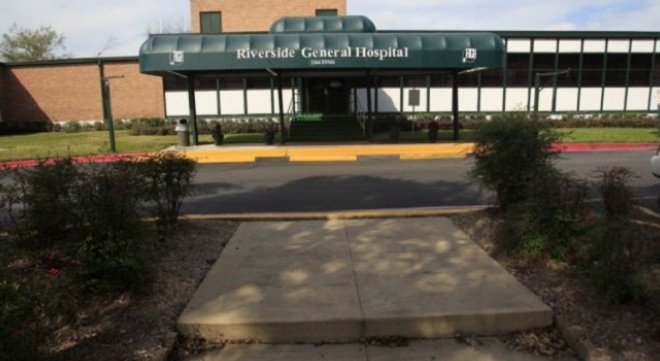
Riverside General Hospital (RGH) in Houston, Texas is the only remaining historically black hospital in the United States. Formerly known as the Houston Negro Hospital, the 1927 facility was the dream project of several black doctors.
Funded by a wealthy white Texas oilman named J. S. Cullinan, Houston Negro Hospital was dedicated to the black community on the Juneteenth holiday in 1926. The Tiffany Company donated a bronze tablet for the event. Interestingly, the dedication was one year prior to the actual opening of the hospital doors.
In 1961, the hospital building was extended and renamed Riverside General. It was the first medical center for black patients in Houston, and provided a place for Black physicians to work who were not allowed to admit patients to the black wards of Houston’s white hospitals.
The staff and faculty of Riverside General Hospital were all African-American. Benjamin C. Covington and Rupert O. Roett, from Meharry Medical School were part of the first wave of black physicians. Hospital memberships were sold to black families for $6 a year. This included free hospitalization for ill patients. Though it was intended to serve the 15,000 in the black community of Houston, the hospital would only average about eight patients per day. This directly affected RGH’s unique black nurses program, which was the only one in the city.
Read more about the hospital here.
Some all-Black facilities were more cruel than helpful.
Comments Are Welcome
Note: We moderate submissions in order to create a space for meaningful dialogue, a space where museum visitors – adults and youth –– can exchange informed, thoughtful, and relevant comments that add value to our exhibits.
Racial slurs, personal attacks, obscenity, profanity, and SHOUTING do not meet the above standard. Such comments are posted in the exhibit Hateful Speech. Commercial promotions, impersonations, and incoherent comments likewise fail to meet our goals, so will not be posted. Submissions longer than 120 words will be shortened.
See our full Comments Policy here.
Interesting but sadening.
[…] previous Negro Hospital constructing is listed on the Nationwide Register of Historic Locations; as such, county leaders view the venture as a solution to restore a […]
[…] former Negro Hospital building is listed on the National Register of Historic Places; as such, county leaders view the project as a way to restore a historically […]
[…] healthcare access and other public assistance programs.The former Negro Hospital building is listed on the National Register of Historic Places; as such, county leaders view the project as a way to restore a historically […]
[…] former Negro Hospital building is listed on the National Register of Historic Places; as such, county leaders view the project as a way to restore a historically […]