Ketanji Brown Jackson sides with death row inmate in first opinion
Share
Explore Our Galleries









Breaking News!
Today's news and culture by Black and other reporters in the Black and mainstream media.
Ways to Support ABHM?
By Lawrence Hurley, NBC News
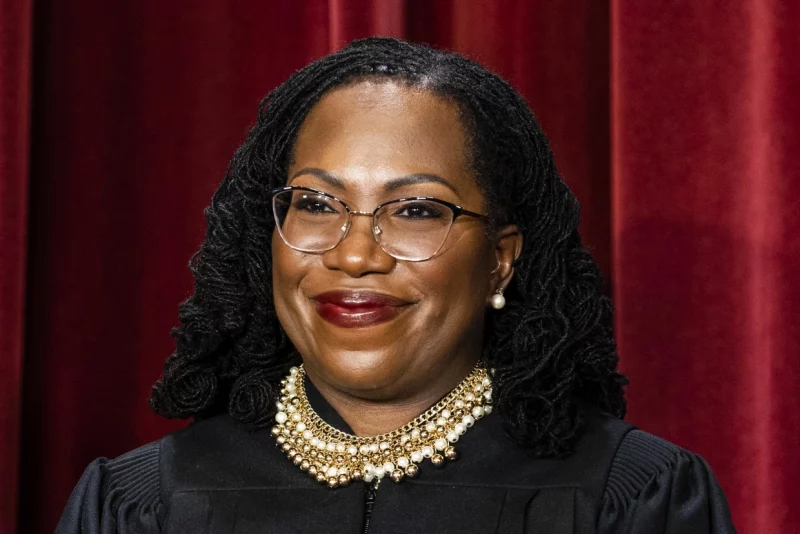
Justice Ketanji Brown Jackson, in her first opinion since taking office over the summer, objected Monday to the Supreme Court’s decision not side with an Ohio death row inmate’s claim.
Jackson, joined by fellow liberal Justice Sonia Sotomayor, said the court should have ruled for Davel Chinn, who was convicted of a 1989 murder in Dayton during a robbery. Instead, the court rejected Chinn’s appeal.
Chinn’s lawyers argued that prosecutors had withheld evidence that a key witness, Marvin Washington, was severely mentally disabled, with an IQ of 48. Washington had identified Chinn as the shooter.
Jackson wrote in an opinion dissenting from the court’s decision to reject Chinn’s claim that there was “no dispute” that the state had suppressed evidence that would have undermined Washington’s credibility as a witness. Under a 1963 Supreme Court ruling called Brady v. Maryland, such conduct can constitute a due process violation.
Jackson took issue with a February ruling by the Cincinnati-based 6th U.S. Circuit Court of Appeals in the state’s favor, which she said failed to properly analyze whether the evidence about Washington affected the outcome at trial.
NBC News has the details.
Justice Jackson isn’t afraid to make waves, which is important because people like Kevin Johnson, who is facing the death sentence, don’t often have people in their corners.
Comments Are Welcome
Note: We moderate submissions in order to create a space for meaningful dialogue, a space where museum visitors – adults and youth –– can exchange informed, thoughtful, and relevant comments that add value to our exhibits.
Racial slurs, personal attacks, obscenity, profanity, and SHOUTING do not meet the above standard. Such comments are posted in the exhibit Hateful Speech. Commercial promotions, impersonations, and incoherent comments likewise fail to meet our goals, so will not be posted. Submissions longer than 120 words will be shortened.
See our full Comments Policy here.