The Execution of Kevin Johnson
Share
Explore Our Galleries









Breaking News!
Today's news and culture by Black and other reporters in the Black and mainstream media.
Ways to Support ABHM?
[Editor’s note: This is part one of three about Kevin Johnson, who was convicted of killing officer William McEntee and is scheduled to be put to death on November 29th. Read parts two and three at the St. Louis American.]
By Sylvester Brown Jr, St Louis American
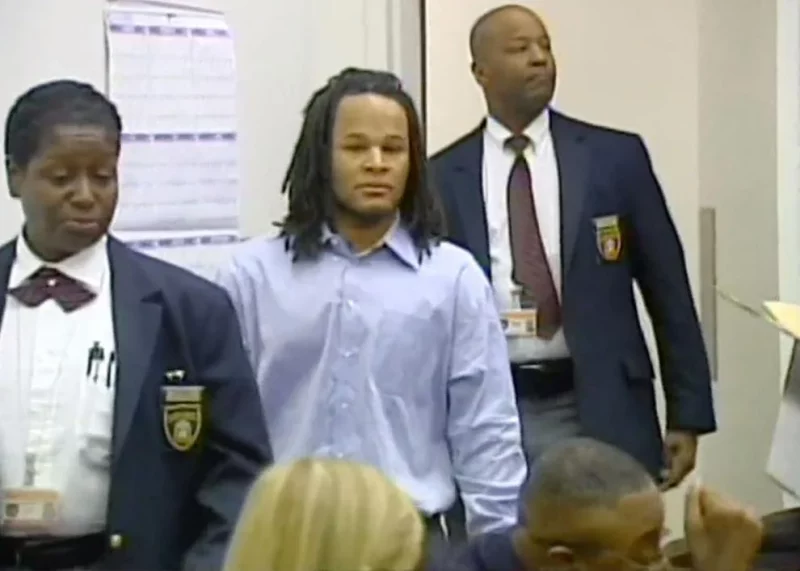
“If I could speak to the McEntee Family, his wife, his kids, I would tell them that I’m sorry. If I could erase that day, I would.”
Those were the opening words in the “Kevin Johnson Clemency” video posted on the Missourians for Alternatives to the Death Penalty’s (madpmo) website. Included in the 35-minute film is Johnson’s recollections about July 5, 2005-the day he, at the age of 19, murdered Kirkwood police Sgt. William McEntee.
According to news reports, Johnson ambushed McEntee who was on patrol in the Meacham Park neighborhood. Reportedly, Johnson approached the passenger side of McEntee’s patrol car, fired several shots then fired two more as McEntee crawled out of his cruiser. In all, McEntee was hit seven times.
On Tuesday Nov. 29, Johnson is scheduled to be put to death at the state prison in Bonne Terre. The Missouri Supreme Court announced in August that it had issued a warrant for his execution. Individuals and advocates such as Madpmo hope to win clemency for Johnson. His defenders claim that he was sentenced to death because of a racially biased prosecution bent on convicting a Black man for killing a white cop.
Johnson had two murder trials, the first ended with a hung jury. The jury by a margin of 10-2, argued for a lesser, non-capital, charge. In the second trial, Madpmo asserts that “the deck was stacked” against Johnson from the outset. They contend that Prosecutor Robert McCulloch-whose police officer father was gunned down by a black man in 1964 -cast doubt on his ability to prosecute Johnson without bias.
In the second trial, McCulloch is accused of using his peremptory strikes to eliminate Black jurors to ensure a predominately white jury. Numerous police officers were allowed to gather in the courtroom and the hallways, Johnson’s Appellate lawyers said, insisting that it sent a signal to jurors to convict.
McColloch got the capital conviction in Johnson’s second trial.
“The system failed Kevin,” Madpmo wrote on its “CLEMENCY FOR KJ” webpage. First, by ignoring the “Batson challenge” a precedent that refers to the court ignoring the peremptory challenges on grounds that the prosecution excluded potential jurors “based on race, ethnicity, or sex.” Secondly, Johnson’s new attorneys argue that his court-appointed lawyers failed to put substantial evidence before the jury that would have mitigated the crime, therefore decreasing the likelihood of a death sentence.
Continue reading part one. Finish the series with parts two and three.
Partial juries often fail Black Americans.
Comments Are Welcome
Note: We moderate submissions in order to create a space for meaningful dialogue, a space where museum visitors – adults and youth –– can exchange informed, thoughtful, and relevant comments that add value to our exhibits.
Racial slurs, personal attacks, obscenity, profanity, and SHOUTING do not meet the above standard. Such comments are posted in the exhibit Hateful Speech. Commercial promotions, impersonations, and incoherent comments likewise fail to meet our goals, so will not be posted. Submissions longer than 120 words will be shortened.
See our full Comments Policy here.