Judge in Trump Jan. 6 Trial Is Known for Tough Capitol Riot Sentences
Share
Explore Our Galleries









Breaking News!
Today's news and culture by Black and other reporters in the Black and mainstream media.
Ways to Support ABHM?
By Charlie Savage and Alan Feuer, The New York Times
A judge with a liberal background and significant criminal trial experience, Tanya S. Chutkan swiftly ruled against the former president in his 2021 attempt to keep White House papers secret from the congressional inquiry.
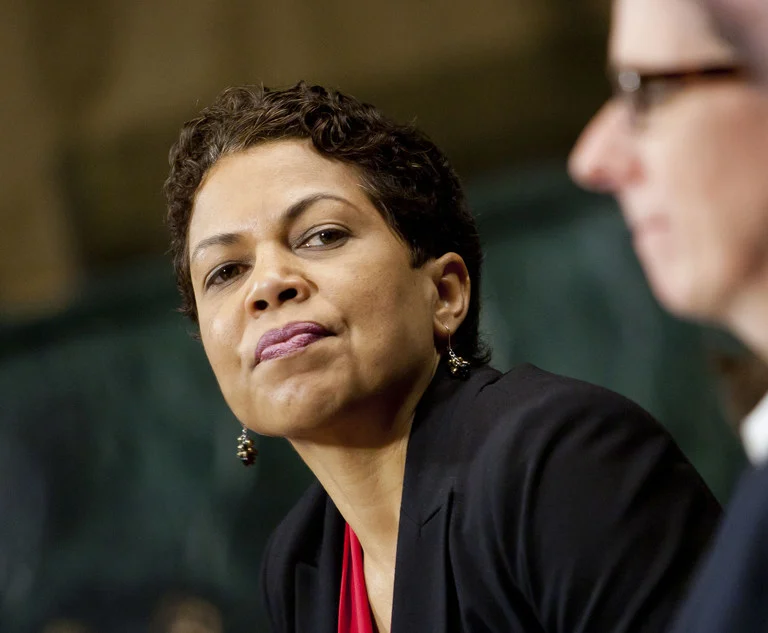
When former President Donald J. Trump appears in court before Judge Tanya S. Chutkan on charges of conspiring to subvert American democracy, it will not be the first time she has dealt with high-profile questions related to Mr. Trump’s attempts to stay in power after losing the 2020 election.
Nearly two years ago, Judge Chutkan rejected Mr. Trump’s efforts to prevent his White House records from being given to the House committee investigating his actions leading up to and during the Jan. 6, 2021, attack on the Capitol by his supporters — delivering a swift and sharp rebuke about the limits of his ability as former president to invoke executive privilege.
“Presidents are not kings,” she wrote, “and plaintiff is not president.” […]
[Chutkan] will supervise the trial, where [Trump’s] presence will be required in the Federal District Court in Washington. […]
Born in Kingston, Jamaica, Judge Chutkan came to the United States to attend college at George Washington University and obtained her law degree at the University of Pennsylvania. She spent more than a decade serving as a court-appointed lawyer for indigent clients and worked for a time at the white-shoe law firm Boies Schiller & Flexner before joining the federal bench in Washington in 2014.
She is married to Peter A. Krauthamer, a former associate judge of the Superior Court in the District of Columbia, which handles local criminal trials. The two met as public defenders in the District of Columbia, she said at her 2014 confirmation hearing, and have two sons.
At that hearing, she also testified that good judges must be “open-minded, fair and prepared.” Each case, she added, must be treated “individually and on its own merits.”
“Impartiality is bedrock,” she said.
Mr. Trump has a history of attacking judges by seeking to portray them as an “Obama judge” or otherwise biased against him, and Judge Chutkan’s background signals a more liberal-leaning outlook.
Learn more about Judge Chutkan by reading the rest of the article here.
Read about the racism prevalent during the Jan. 6 riot in this Breaking News article.
Find even more Breaking News here.
Comments Are Welcome
Note: We moderate submissions in order to create a space for meaningful dialogue, a space where museum visitors – adults and youth –– can exchange informed, thoughtful, and relevant comments that add value to our exhibits.
Racial slurs, personal attacks, obscenity, profanity, and SHOUTING do not meet the above standard. Such comments are posted in the exhibit Hateful Speech. Commercial promotions, impersonations, and incoherent comments likewise fail to meet our goals, so will not be posted. Submissions longer than 120 words will be shortened.
See our full Comments Policy here.