Jesse Jackson’s Health Struggles Highlight the Impact of His Civil Rights Leadership
Share
Explore Our Galleries









Breaking News!
Today's news and culture by Black and other reporters in the Black and mainstream media.
Ways to Support ABHM?
By Christina Carrega, CapitalB
The 84-year-old recovered from two bouts of COVID in 2021 and 2023 while battling a neurodegenerative disorder.
.jpg)
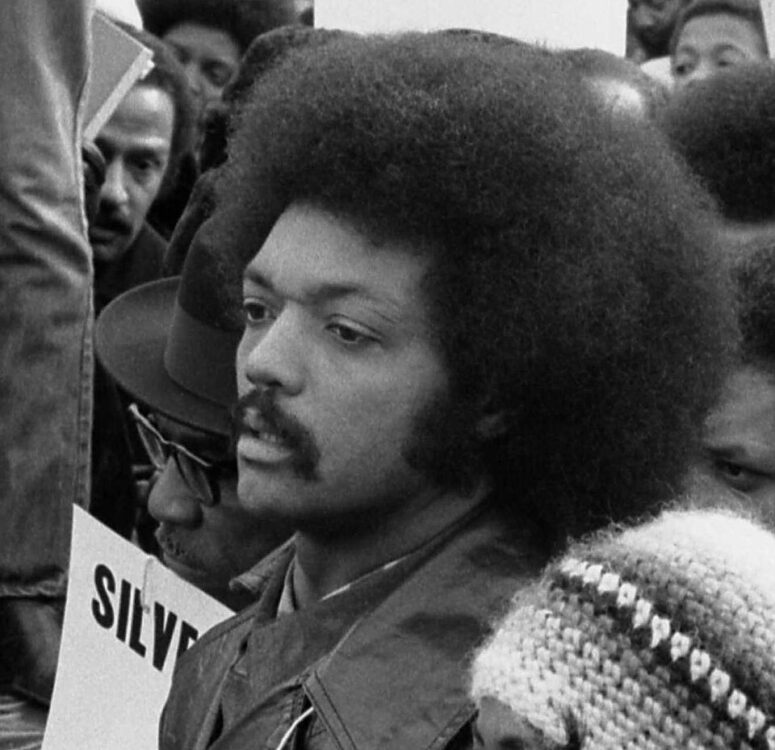
A longtime friend of the Rev. Jesse Jackson says the civil rights icon is doing better, but he’s unable to respond as quickly as he used to.
[…]
Yeary said it’s difficult to comprehend the difference in Jackson today compared to the statuesque leader he met over 40 years ago.
It was Yeary’s senior year of high school in 1983 when Jackson made a stop in Durham, North Carolina. Jackson was on his “Southern crusade” to register students to vote at Durham High School, and Yeary was assigned as the one-day substitute student-body president who was tasked to introduce Jackson to the podium for his speech.
Yeary only had a few minutes to prepare, but as the son of an English teacher and an oratorical competitor, he was ready.
While Yeary doesn’t remember what he said about Jackson in his introduction, he did remember what Jackson said to him afterward. Jackson asked him if he would either become a preacher or a lawyer — Yeary went on to do both.
The following year, in 1984, Jackson launched his first attempt to become the first Black president of the United States. While Jackson didn’t win the Democratic nomination that year, it was his second attempt, in 1988, that paved the way for future generations of Black people to run for president.
[…]
Back then, the process to get delegates to vote for you was more of a “winner-take-all” atmosphere, Yeary, 60, told Capital B in an interview in 2023. This meant that even if a candidate like Jackson won a significant portion of the vote — especially among Black voters or progressive constituencies — they might get few or no delegates from that state.
“So it was really unfair that by the time you got to states where constituencies may have been favorable to an outsider candidate, you had already kind of stacked the deck,” said Yeary, a former CEO of the Rainbow PUSH Coalition. “Well, Reverend Jackson pushed to get that rule changed.”
Learn how his advocacy led to reforms that made the process more equitable.
Discover more social movements and organizations doing similar work as Jackson in the 60s, 70s, and 80s.
Don’t forget to stop by our breaking news before you leave.
Comments Are Welcome
Note: We moderate submissions in order to create a space for meaningful dialogue, a space where museum visitors – adults and youth –– can exchange informed, thoughtful, and relevant comments that add value to our exhibits.
Racial slurs, personal attacks, obscenity, profanity, and SHOUTING do not meet the above standard. Such comments are posted in the exhibit Hateful Speech. Commercial promotions, impersonations, and incoherent comments likewise fail to meet our goals, so will not be posted. Submissions longer than 120 words will be shortened.
See our full Comments Policy here.