Inside prison walls, here’s how a book program is changing lives
Share
Explore Our Galleries









Breaking News!
Today's news and culture by Black and other reporters in the Black and mainstream media.
Ways to Support ABHM?
By Albinson Linares, NBC News
.jpg)
Maria Montalvo speaks with emotion, her eyes shining as she recounts her reading experiences. She says she especially enjoys books by Isabel Allende, Octavia Butler, Toni Morrison, Erika L. Sánchez and John Grisham because, in her words, “reading makes you wiser and you learn how people live in other countries. It takes your mind to other places you can’t travel to.”
Montalvo isn’t an ordinary reader. During her incarceration at Edna Mahan Correctional Facility, a prison in New Jersey, she has participated in the activities of Freedom Reads, a nonprofit organization that has been promoting reading in U.S. prisons since 2020.
“Freedom Reads has brought books on different topics, and it’s very important to read because it makes you wiser,” Montalvo, 60, said in an interview with Noticias Telemundo. “Books change the prison climate; they change the way people think about themselves. This opens your mind and makes you want to change.”
Montalvo proudly recalled the arrival of the books at her prison in May.
“They brought two bookcases that are very symbolic and very important, because they relate to literature, justice and writers like Martin Luther King,” she said.
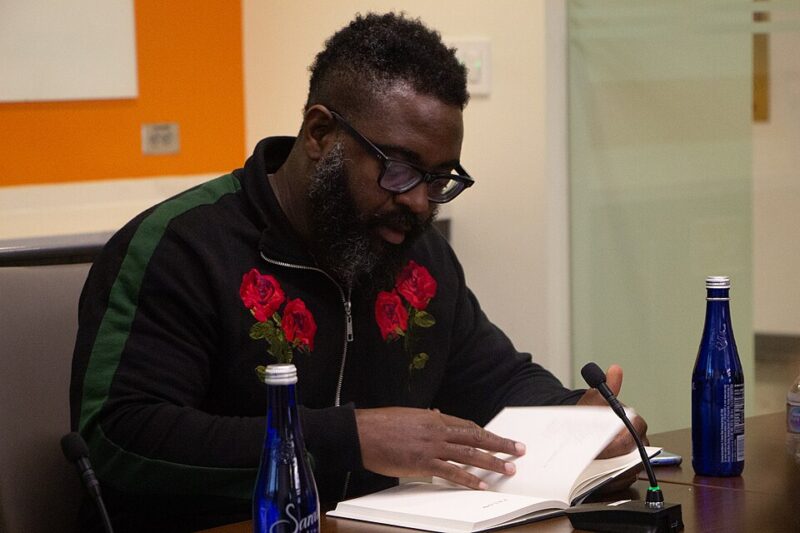
The origin of Freedom Reads is closely linked to the life of Reginald Dwayne Betts, who pleaded guilty to car theft at age 16 and was sentenced to nine years in the Virginia prison system.
There are many incarcerated people of color because of the war on drugs.
Comments Are Welcome
Note: We moderate submissions in order to create a space for meaningful dialogue, a space where museum visitors – adults and youth –– can exchange informed, thoughtful, and relevant comments that add value to our exhibits.
Racial slurs, personal attacks, obscenity, profanity, and SHOUTING do not meet the above standard. Such comments are posted in the exhibit Hateful Speech. Commercial promotions, impersonations, and incoherent comments likewise fail to meet our goals, so will not be posted. Submissions longer than 120 words will be shortened.
See our full Comments Policy here.