Inside HIV Activists’ Plan To Save Lives as Trump Guts Federal Funding
Share
Explore Our Galleries









Breaking News!
Today's news and culture by Black and other reporters in the Black and mainstream media.
Ways to Support ABHM?
by Amy Maxmen, KFF Health News
While Congress fails to stave off cuts to HIV care, community leaders in Mississippi and beyond race to limit the damage.
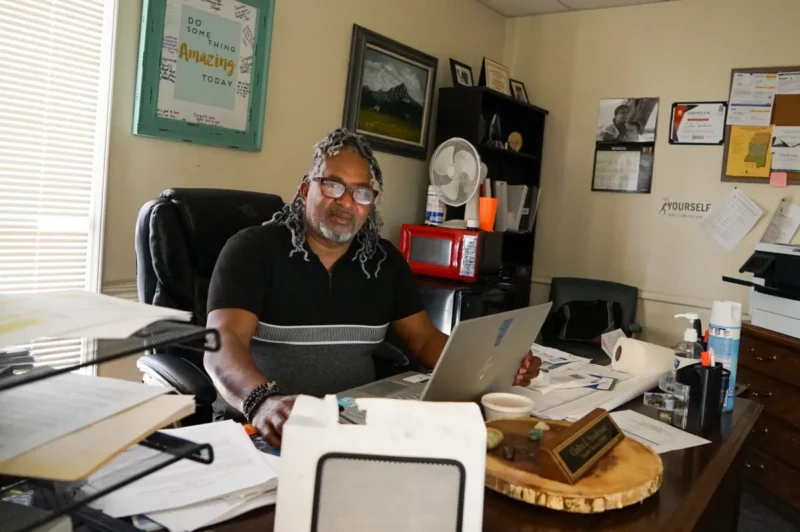
GREENVILLE, Miss. — Cedric Sturdevant woke up with “a bit of depression” but made it to church, as he does every Sunday. In a few days, he would drive from Mississippi to Washington, D.C., to join HIV advocates at an April rally against the Trump administration’s actions.
It had clawed back more than $11 billion in federal public health grants to states and abruptly terminated millions of dollars in funds for HIV work in the United States. Testing and outreach for HIV faltered in the South, a region that accounts for more than half of all HIV diagnoses.
Dangerous changes loomed: To compensate for tax cuts for the wealthy, Trump’s “big, beautiful” bill and budget proposal for fiscal year 2026 threaten to curtail Medicaid, which provides health coverage for people with low incomes and disabilities. About 40% of adults with HIV rely on it for their lifesaving treatments.
Further, the budget proposes to eliminate all HIV prevention programs at the Centers for Disease Control and Prevention. This alone could lead to an additional 14,600 HIV-related deaths within the next five years, according to one analysis.
Trump’s budget proposal also would cancel a major grant that provides housing assistance for people with HIV. And it would end a strategic initiative to expand HIV services in minority communities, and another to support the mental health of people of color with HIV or at risk of infection.
[…]
The cuts affect Sturdevant personally. He is a gay, Black man living with HIV and the co-founder of a grassroots group that combats health disparities in the Mississippi Delta, one of the poorest regions of the country.
[…]
In the past few months, HIV advocates have begun to organize and strategize ways to limit the damage as federal funds are slashed and inflammatory rhetoric rises.
“It is a very scary time to be Black, queer, and living with HIV,” said Marnina Miller, co-executive director of the Positive Women’s Network, a nationwide group for women living with HIV. “But I am grateful that I am part of a community that will not bow down.”
Discover how the HIV crisis continues.
Discover more recent Black news.
Comments Are Welcome
Note: We moderate submissions in order to create a space for meaningful dialogue, a space where museum visitors – adults and youth –– can exchange informed, thoughtful, and relevant comments that add value to our exhibits.
Racial slurs, personal attacks, obscenity, profanity, and SHOUTING do not meet the above standard. Such comments are posted in the exhibit Hateful Speech. Commercial promotions, impersonations, and incoherent comments likewise fail to meet our goals, so will not be posted. Submissions longer than 120 words will be shortened.
See our full Comments Policy here.