In rejecting Voting Rights Act, Supreme Court says the South is no different than rest of country on race
Share
Explore Our Galleries









Breaking News!
Today's news and culture by Black and other reporters in the Black and mainstream media.
Ways to Support ABHM?
By theGrio.com
[Today’s voting rights] opinion by Chief Justice John Roberts takes great pains to reject the notion that the South of today has any lingering challenges that bar minorities from voting. Roberts argues that the nine states covered fully by Section 4b of the law don’t discriminate against minority voters any more or less than other places in the country.
[…]
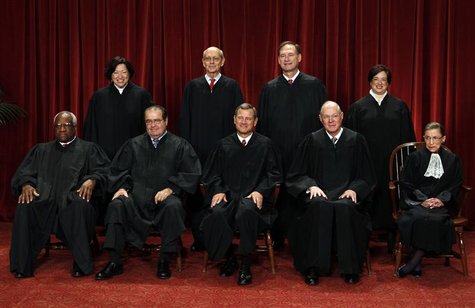
“The coverage formula met that test in 1965, but no longer does so. Coverage today is based on decades-old data and eradicated practices. The formula captures States by reference to literacy tests and low voter registration and turnout in the 1960s and early 1970s. But such tests have been banned nationwide for over 40 years,” Roberts writes. “And voter registration and turnout numbers in the covered States have risen dramatically in [that time]. Racial disparity in those numbers was compelling evidence justifying the preclearance remedy and the coverage formula. There is no longer such a disparity. In 1965, the States could be divided into two groups: those with a recent history of voting tests and low voter registration and turnout, and those without those characteristics. Congress based its coverage formula on that distinction. Today the Nation is no longer divided along those lines, yet the Voting Rights Act continues to treat it as if it were.”
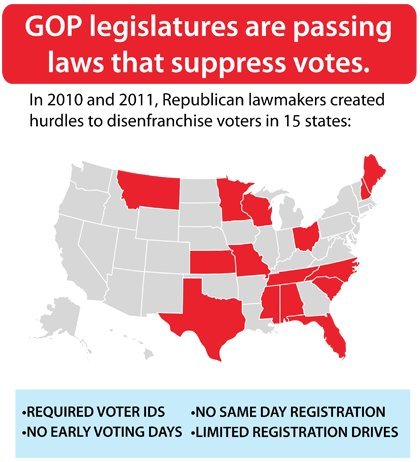
The Court’s liberals were outraged at such logic. In a dissent joined by the Court’s four Democratic appointees, Justice Ruth Bader Ginsburg delivered a long, exhaustive list of controversial voting laws passed just in the last decade in some of the southern States covered by the law….
Further, Ginsburg argues that the states in the Deep South have a particular reason to get heightened scrutiny in the future: politics. The states covered by Section 5, such as Alabama, have highly racialized voting patterns, with most blacks supporting Democrats and Republicans earning white voters. That divide, Ginsburg argues, creates an obvious incentive for laws that would limit the votes of blacks.
“Racial polarization means that racial minorities are at risk of being systematically outvoted and having their interests underrepresented in legislatures. Second, when political preferences fall along racial lines, the natural inclinations of incumbents and ruling parties to entrench themselves have predictable racial effects. Under circumstances of severe racial polarization, efforts to gain political advantage translate into race-specific disadvantages.”
Read the full article and watch the video here.
Read more Breaking News here.
Comments Are Welcome
Note: We moderate submissions in order to create a space for meaningful dialogue, a space where museum visitors – adults and youth –– can exchange informed, thoughtful, and relevant comments that add value to our exhibits.
Racial slurs, personal attacks, obscenity, profanity, and SHOUTING do not meet the above standard. Such comments are posted in the exhibit Hateful Speech. Commercial promotions, impersonations, and incoherent comments likewise fail to meet our goals, so will not be posted. Submissions longer than 120 words will be shortened.
See our full Comments Policy here.