Hidden portraits: African American life gets a spotlight
Share
Explore Our Galleries









Breaking News!
Today's news and culture by Black and other reporters in the Black and mainstream media.
Ways to Support ABHM?
By Nadja Sayej, The Guardian
At a new exhibition at the Metropolitan Museum of Art, studio portraits of anonymous black Americans give a rarely seen view of life at a time of change.
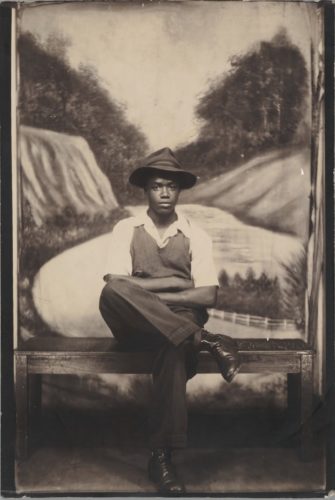
Unknown American maker. Studio portrait, 1940s–50s. Photograph: The Metropolitan Museum of Art
In 1861, African American abolitionist Frederick Douglass took the stage at Boston’s Tremont Temple Baptist church and declared: “To the eye and spirit, pictures are just what poetry and music are to the ear and heart….”
His spellbinding words are the inspiration for the exhibition African American Portraits: Photographs from the 1940s and 1950s, which opens at the Metropolitan Museum of Art in New York City on 26 June.
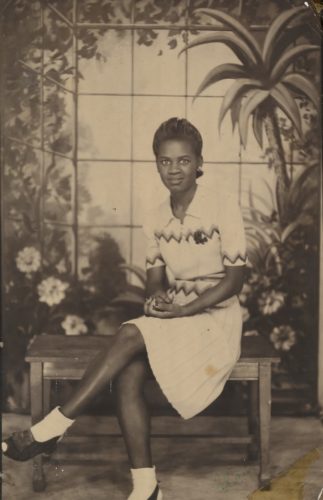
Unknown American maker. Studio portrait, 1940s–50s. Photograph: The Metropolitan Museum of Art
More than 150 studio portraits from the mid-20th century will offer a rarely seen view of African Americans during the second world war, a time of cultural change, uncertainty and growth of the middle class.
“These photos have a certain quality and beguiling characteristic that separate themselves from the huge population of images we see every day,” said Jeff Rosenheim, the Met’s photography curator. “They tell stories that other stories from the same time do not.”
The exhibition features classic photo portraits of parents with their newborns, or standing proudly in lavish fur coats, suits and ties. Standing before picturesque, painted scenery of forests, many are smiling while wearing their Sunday best, like feathered hats, pearl earrings and leather gloves, or clutching their purses with perfect nail polish.
However, most of the photographers and their subjects featured in this exhibition are unknown, making it an exhibition of anonymous portraits said Rosenheim, who is the author of 10 books on Depression-era photojournalist Walker Evans. He also previously curated the Met’s Photography and the American Civil War exhibition from 2013.
Read the full article here.
Read more Breaking News here.
View ABHM galleries here.
Comments Are Welcome
Note: We moderate submissions in order to create a space for meaningful dialogue, a space where museum visitors – adults and youth –– can exchange informed, thoughtful, and relevant comments that add value to our exhibits.
Racial slurs, personal attacks, obscenity, profanity, and SHOUTING do not meet the above standard. Such comments are posted in the exhibit Hateful Speech. Commercial promotions, impersonations, and incoherent comments likewise fail to meet our goals, so will not be posted. Submissions longer than 120 words will be shortened.
See our full Comments Policy here.