‘He saw signs saying No Blacks – but he never got bitter’: Sterling Betancourt, the man who brought steelpan music to the UK
Share
Explore Our Galleries









Breaking News!
Today's news and culture by Black and other reporters in the Black and mainstream media.
Ways to Support ABHM?
Garth Cartright, The Guardian
Moving to the UK in the 1950s, the Trinidadian musician endured racism and built his own instruments from waste. After his death aged 96, his widow recalls his patience and positivity
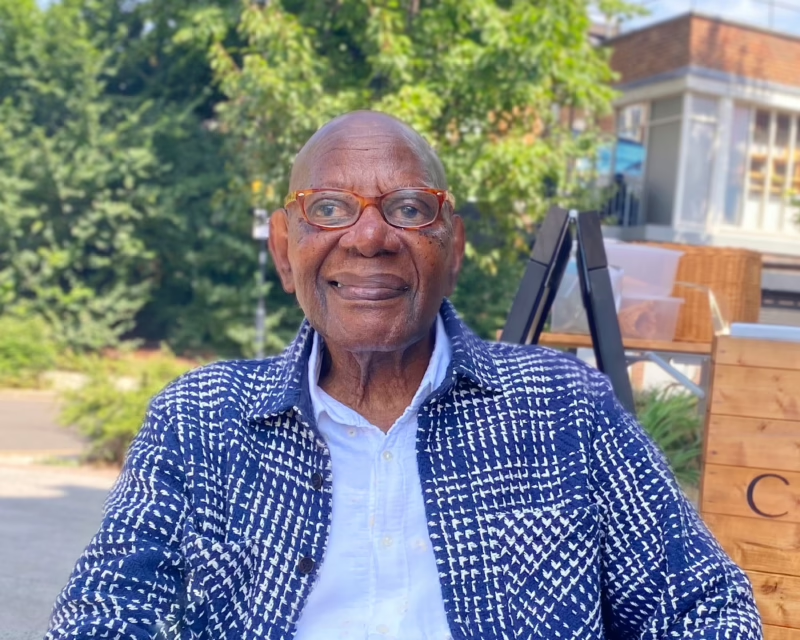
Wearing rusty steelpans hewn from oil drums around their necks, Sterling Betancourt and his 10 bandmates faced a sceptical crowd as they stood outside the recently opened Royal Festival Hall in London in 1951. Jokes about “black magic” were heard. Then they began striking their pans with mallets and those watching were stunned by the beautiful music that emanated.
The Trinidadian musicians were playing at the Festival of Britain – the government-funded jamboree celebrating British and Commonwealth cultural excellence as the country shook off the trauma of war – and that day they introduced a mellifluous style of music to the UK that has since been passed down from generation to generation. When Betancourt died on 3 June, aged 96, there was little fanfare. As a musician, he was never “famous” in the sense of having hit records or headlining festivals. Yet this warm, humble nonagenarian – and MBE recipient – was among the last of the Windrush-era musicians who changed the DNA of British music. Later this month, his steelpan music will return to the Royal Festival Hall for Steel Scenes, a festival marking the 75th anniversary of the Trinidad All-Steel Percussion Orchestra (Taspo), the group he played with in 1951.
After wowing the Festival of Britain, Taspo undertook an extensive UK tour, performed on BBC TV and began a residency in Paris where they made Europe’s first commercially released steelpan band recordings. All the members of Taspo then headed back to Trinidad later that year – except Betancourt, who remained in London, building his own instruments from oil drums discarded in the city’s waste grounds.
He initially struggled to interest the public in pan. “He was quite distraught,” recalls his widow Beatrice, saying he had to learn jazz drumming to make a living. But he was no quitter[.]
Learn more about Betancourt.
Comments Are Welcome
Note: We moderate submissions in order to create a space for meaningful dialogue, a space where museum visitors – adults and youth –– can exchange informed, thoughtful, and relevant comments that add value to our exhibits.
Racial slurs, personal attacks, obscenity, profanity, and SHOUTING do not meet the above standard. Such comments are posted in the exhibit Hateful Speech. Commercial promotions, impersonations, and incoherent comments likewise fail to meet our goals, so will not be posted. Submissions longer than 120 words will be shortened.
See our full Comments Policy here.